 +
+
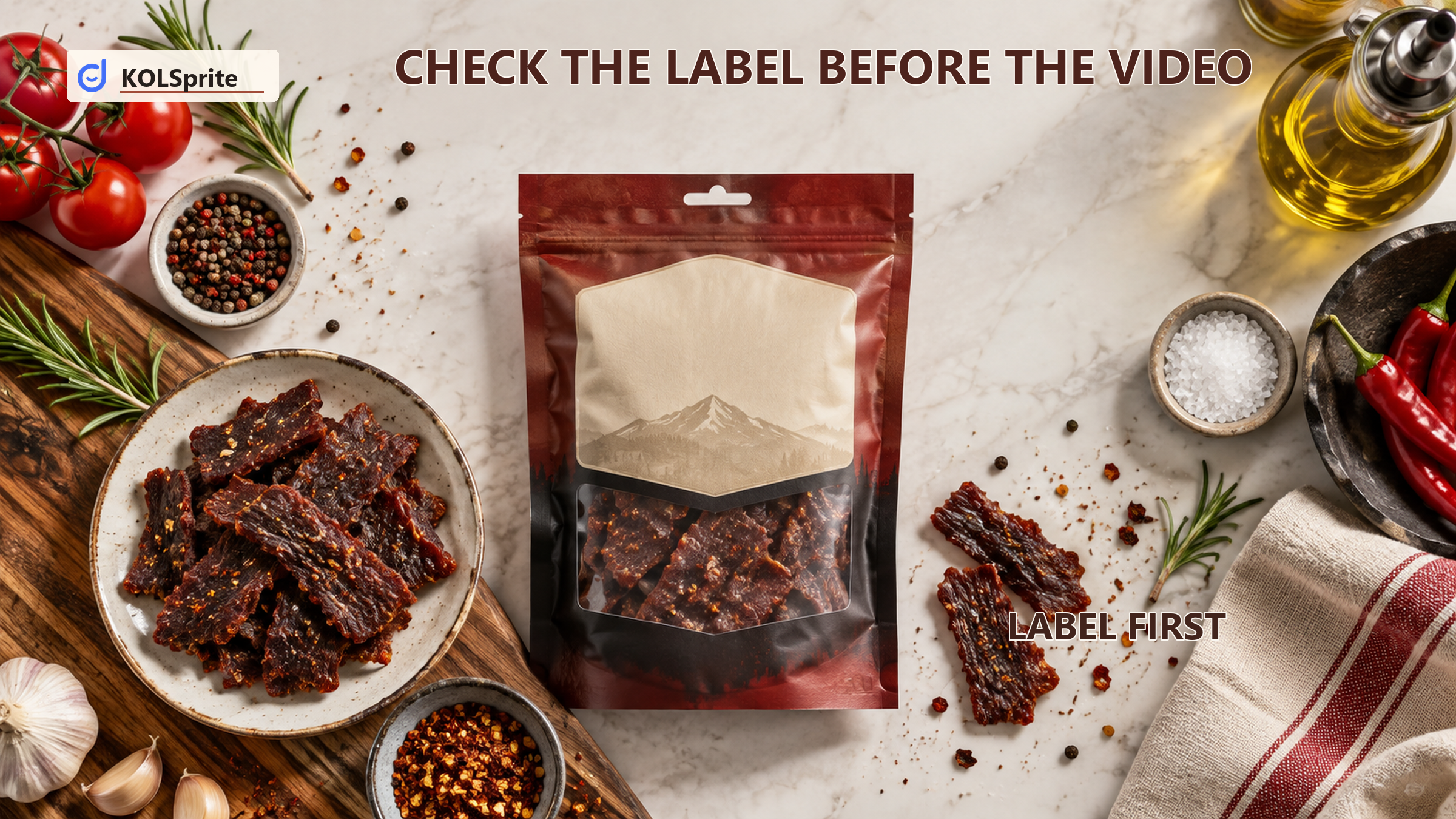
A US packaged-snack founder can film spicy jerky in an afternoon. The harder question is whether the exact bag is ready to be listed, sold, and shipped. Before sending a creator sample, place a clear photo of the final package label beside the proposed Shop title and talking points. Hold the video promise until the product, label, seller documentation, and fulfillment plan all describe the same item.
The package and seller documents are the first creative brief. When those facts are settled, a creator can make the food appetizing without guessing at flavor, pack size, sourcing, or shelf life. When they are not settled, a mouthwatering video cannot repair a label that does not match the package.
Picture the common sequence. A test bag of jerky reaches the content team. The pieces look good on camera, the spice suggests an easy hook, and someone writes a title while the creator plans a taste reaction. Meanwhile, the final label is still changing, the six-ounce size may not be the unit that ships, and the seller has not finished checking the qualification requirements that apply to the product and its role.
The video can still make people hungry. First, though, answer three questions about the bag that will ship. Can this seller list it? Does the Shop page match the label? Can the creator show it without making a claim the brand cannot back up? A good reputation does not answer those questions for a new flavor or pack size.
Begin by identifying who is selling the food and what product will be fulfilled. Review the locked TikTok Shop material on food-related seller requirements, food product requirements, and product listings for the current decision. The guide to placing a product in the right Shop category can frame the buyer-facing side of that choice. Do not infer qualification from a competing listing or from the fact that a sample can be filmed.
Start with the seller's own files. Name who will sell the jerky and which bag is in the launch. Check the papers for that bag, not for an old label or a flavor the team may release later. If a required item is missing, put the launch on hold. A filming date is not proof that the seller is ready.
A creator cannot settle the seller's food review. Getting a sample in the mail only proves that a bag arrived. The seller must check its own papers, product facts, and right to list the item. Give the creator the facts after that work is done. Do not ask a confident taste reaction to stand in for it.
Keep one page for open items, with an owner and a date beside each one. Advice on how to sell food on TikTok Shop has to start with the actual seller and bag. Ask whether this seller can offer this jerky in the chosen category. Then check what the seller must provide before that exact product can go live.
Use KOLSprite for Chrome to inspect a public example, then mark which claims your label and product can support. Use desktop Chrome. On a phone, open this article on your computer to install the extension.
Set the final package on the table and read the proposed Shop page against it. Check the product name, flavor, net quantity, count, package appearance, and any other factual statement the buyer uses to understand what will arrive. Then compare every variant. Guidance on keeping each sold variant consistent with its listing is especially relevant when flavor or pack size changes the promise.
Do not let a creator's shorthand quietly become the product name. “Hot jerky,” “six-ounce spicy jerky,” and “crunchy carne seca” describe meaningfully different buyer expectations. They may refer to different flavors, textures, quantities, or products. A visible phrase in public content is a prompt to verify your own package, not a menu of interchangeable copy.
The buyer gets a real bag, not the idea in the video. The team must know which stock will ship, how it will be packed, and whether the listing still describes it at that point. Check any shelf-life statement against the seller's own records. A public video of another snack cannot answer these questions.
Once the bag and listing match, give the creator a scene people can picture. Show the sealed bag and its flavor. Open it. Show the pieces. Let the creator say what this bite tastes and feels like to them. That is a personal reaction, not a fact about every bag. A desk-snack or road-trip scene is fine if it does not hint at claims the seller cannot support.
A strong shot list separates objective details from subjective reaction. Objective details include the visible bag, labeled flavor, sold quantity, and how the product is presented. Subjective details include whether the creator finds it smoky, hot, chewy, or satisfying. The creator should not state a package size they have not checked or claim a sourcing, nutrition, safety, or shelf-life fact because it sounds persuasive.
This is the point to write a bounded creator brief, using the settled product facts rather than asking the video to discover them. The guide to briefing a creator only after the product facts are settled can support that handoff. A precise brief makes the appetite appeal stronger because the viewer can connect the reaction to the item actually offered.
Document gate: Record the seller role, exact shelf-stable jerky product, and status of the seller-held qualification material. Decision: hold if the specific product review is incomplete.
Label gate: Compare the final package with the Shop title, images, flavor, quantity, and variant. Decision: revise any text or image that describes another bag.
Demonstration gate: Show the sealed package, opening, food appearance, and a genuine taste response tied to the named flavor. Decision: send the sample only after the first two gates pass.
Source note: KOLSprite public US searches, accessed September 29, 2026. Visible descriptions included hot jerky, six-ounce spicy jerky, and crunchy carne seca. The contrast is a language check for the seller's own flavor, quantity, and label, not a finding that any sampled listing is compliant.
Suppose the working title says “six-ounce spicy beef jerky,” but the final bag in inventory has a different quantity and a named hot flavor. The label gate fails even if the food looks identical in a close shot. Update the listing and brief to the final package before recording. If the seller-role review is also incomplete, keep the sample with the team. A creator's enthusiasm cannot clear either gate.
If all owned facts match, the filming instruction becomes concrete: show this bag, name this flavor, open it, display a piece, and give an honest first-person taste response. That is enough material for an appealing short video. There is no need to invent broad popularity, quality, or safety claims.
Keep the approved bag and listing side by side when the video is edited. If the pack size, flavor name, or front label changes before launch, pause that version of the clip. Check each spoken line, on-screen word, and product shot against the new bag. A close-up of the old package can mislead even when the caption has been fixed. The team may be able to replace one shot; it may need to film the opening again. Make that call before the creator posts or the Shop page goes live, while the mismatch is still easy to catch.
Discuss the question without sharing confidential label drafts or customer data.
 +
+
Use public US beef-jerky product and video examples as a narrow reference set. In KOLSprite, compare how visible snack listings and videos describe flavor, package size, and use occasion. The output should be a short list of language to check against the seller's actual label and inventory. Circle every phrase that would change what a buyer thinks they will receive.
Then close the reference set and inspect the owned product. Is the flavor word exact? Is the quantity the sold quantity? Does “crunchy” describe this item, or did it come from a different product? Does the use occasion fit the product without adding a nutrition, safety, or performance promise? The value of the public examples is their contrast. They help the team notice distinctions before those distinctions become listing errors.
KOLSprite does not establish food safety, category approval, verified taste, sales, profitability, or complete US snack demand. It does not replace seller documentation, label review, product handling decisions, or the seller's reading of current Shop requirements. Public descriptions are references, not approvals.
End the review with a simple choice: send the sample or hold it. Send it when the seller has checked the product, the final label matches the listing, the stock and shipping plan fit the offer, and the brief uses only facts the team can back up. Otherwise, hold it. “Nearly final” is not the bag a buyer will receive.
Write the reason for every hold in plain language: missing seller document review, package quantity mismatch, unsettled flavor name, unsupported talking point, or fulfillment detail not yet aligned. Assign an owner and a next check. This makes a hold operational rather than indefinite and prevents the content calendar from quietly overriding the product decision.
Leave the review with three marked lines: seller check, label match, and video claim. Name the person who owns each open line. That is how to sell food on TikTok Shop without asking a video to fix a product gap. When all three are clear, the creator can make the jerky look as good as it tastes to them. The buyer will see the same bag in the video that arrives at the door.
Latest Articles

As an essential, data-driven toolkit for TikTok influencers and marketers, KOLSprite provides powerful features for effortless creator discovery, trending content identification, and actionable real-time insights.
It empowers users to make smarter decisions and significantly boosts their TikTok business.

 Refer & Earn