 +
+
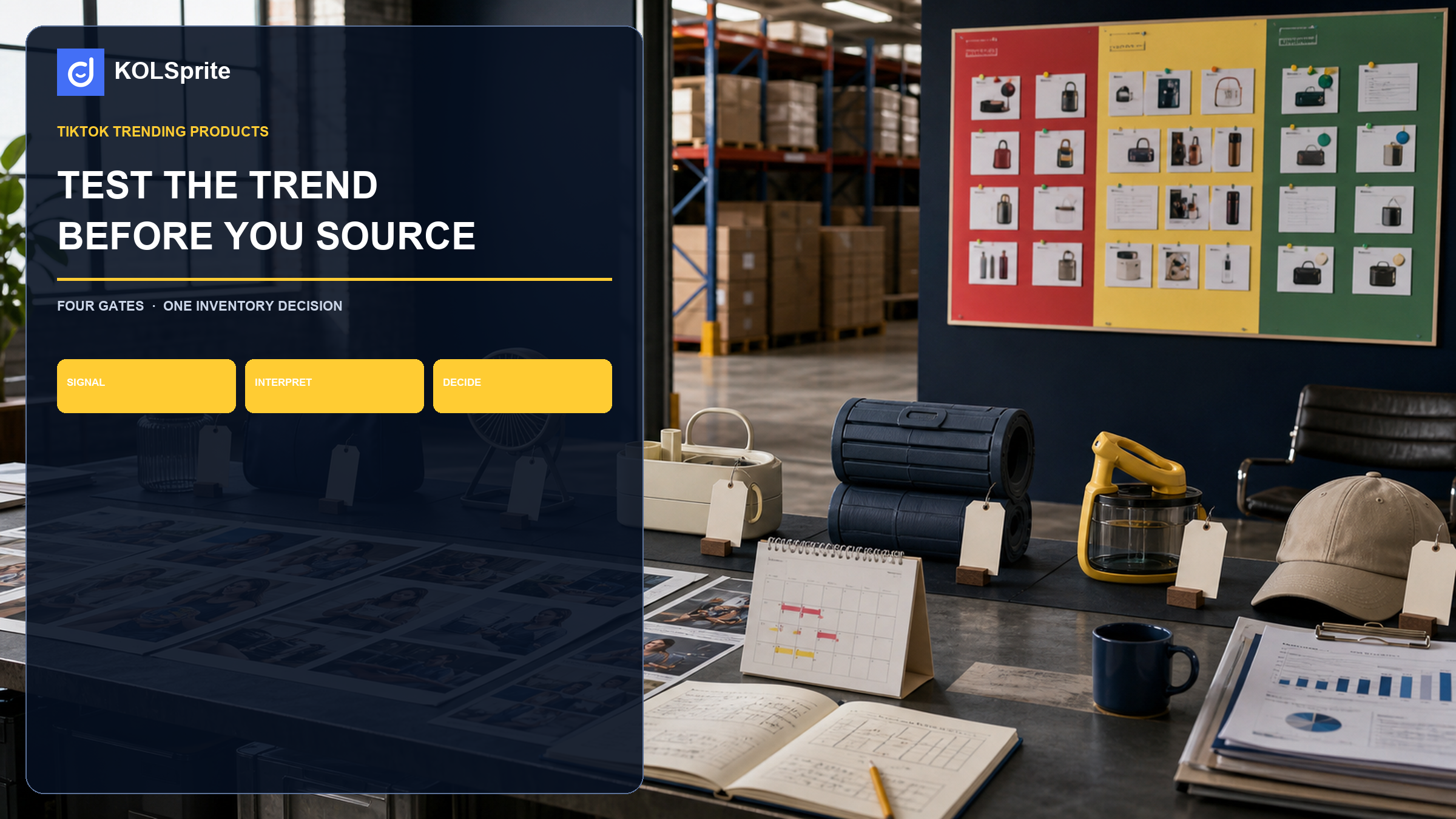
The sourcing meeting has a TikTok ranking page on screen and an expensive question on the table: is this item worth testing, or does it only look unavoidable this week? Before anyone treats it as an inventory lead, run a short validation sprint across product proof, creator supply, timing, and commercial constraints. Record the result in a Trend-to-Inventory memo with one of three decisions: test with a cap, watch for more proof, or reject the idea. The memo turns feed activity into a bounded sourcing choice.
A trend label creates pressure because it seems to answer several questions at once. It does not. A ranking, a cluster of clips, or a sudden rush of similar hooks may show that people are posting about an item. It does not establish durable demand, margin, supplier reliability, safety, shipping performance, or future sales.
The useful question is narrower: does this signal deserve a capped test that the team can afford to learn from? That wording changes the meeting. Instead of arguing about whether an item is “hot,” the team asks which proof is present, which proof is missing, and what evidence would change the decision.
TikTok maintains product ranking pages for shoppers and sellers, while its Creative Center materials describe trend discovery tools and the need to review current creative context. Those pages can start research, but they do not replace a business case. See TikTok Shop’s ranking list and TikTok’s Creative Center guidance for the public starting points.
Use this sentence when the conversation is moving too fast: “We will source only after the product passes four separate gates; until then, it is a research lead.” The sentence gives the team permission to act without pretending that a public signal is a forecast.
For TikTok trending products, a fast decision should be reversible. Define the test ceiling before the research begins. That ceiling might cover a sample order, a small creative brief, or a limited landing-page test. The right ceiling depends on the business, so it belongs in the memo rather than in a generic template.
Give each gate a short, disciplined pass. First, look for product proof: several recent videos that show what the item does, who uses it, and why the demonstration holds attention. Second, look for creator supply: more than one account type using a format that fits the product. Third, check timing: dates, repeated appearances, and whether the clips point to the same short-lived event. Last, open the commercial file: cost, lead time, claims, returns, packaging, and fulfillment limits.
Three minutes is enough to decide whether a lead moves into deeper work. It is not enough to certify an opportunity. That distinction matters when an eye-catching clip gets replayed through several accounts. Repetition can be a sign of spread, copied creative, paid distribution, or a viewer’s own feed history. The team should preserve the examples that informed the judgment, then state what those examples cannot prove.
TikTok’s trend guidance advises advertisers to use trends with current context rather than treating a trend as a fixed asset. The same principle applies to a product lead: inspect the actual recent videos and the surrounding discussion before assigning meaning. TikTok explains its trend tools in its How to Use Trends guidance.
Use KOLSprite to review public product, video, and creator signals before your team applies margin, inventory, policy, and supplier checks.
Register and claim a three-day trial
Gate one: product proof. Save examples that show a credible use case. A close-up reveal may be enough for a low-risk novelty item. A product that touches skin, food, children, or a safety-sensitive use needs a much harder review. Public clips cannot clear those constraints.
Gate two: creator supply. Look beyond a single breakout account. Do different creators explain the item in their own words? Are there formats a brand could commission without copying a clip? A small set of distinct demonstrations is more useful than many near-identical reposts.
Gate three: timing. Record the newest and oldest relevant examples in the sample. A spike around a holiday, a platform challenge, or a single news event may deserve a watch decision rather than inventory. The evidence clock asks whether the signal is still forming or already fading.
Gate four: commercial constraints. This gate happens outside public trend research. The owner checks sourcing, gross-margin assumptions, lead times, return risk, labeling, product claims, and operational capacity. A compelling video never overrules that review.
| Gate | Public evidence to collect | Question for the owner | Possible status |
|---|---|---|---|
| Product proof. | Recent demonstrations, captions, visible use cases. | Can we name a real problem the item solves? | Pass, watch, or fail. |
| Creator supply. | Distinct creators, formats, and audience contexts. | Could we brief a legitimate variation? | Pass, watch, or fail. |
| Timing. | Post dates, recurrence, event dependence. | Is the signal current enough for our lead time? | Pass, watch, or fail. |
| Commercial constraints. | Internal sourcing and risk review. | Can we test without creating an avoidable commitment? | Pass, watch, or fail. |
Source date: 2026-08-20. Scope: an illustrative decision matrix built from public TikTok product, video, caption, and creator-context research plus internal operating review. Limitations: it is not market measurement, demand proof, profit analysis, supplier due diligence, or a prediction of sales.
The matrix is deliberately plain. Its value comes from forcing a missing column into view. A team that has only product proof should not talk as though it also has creator supply or operational approval. A watch status is useful when the missing proof may appear soon. A fail status is useful when the constraint is structural.
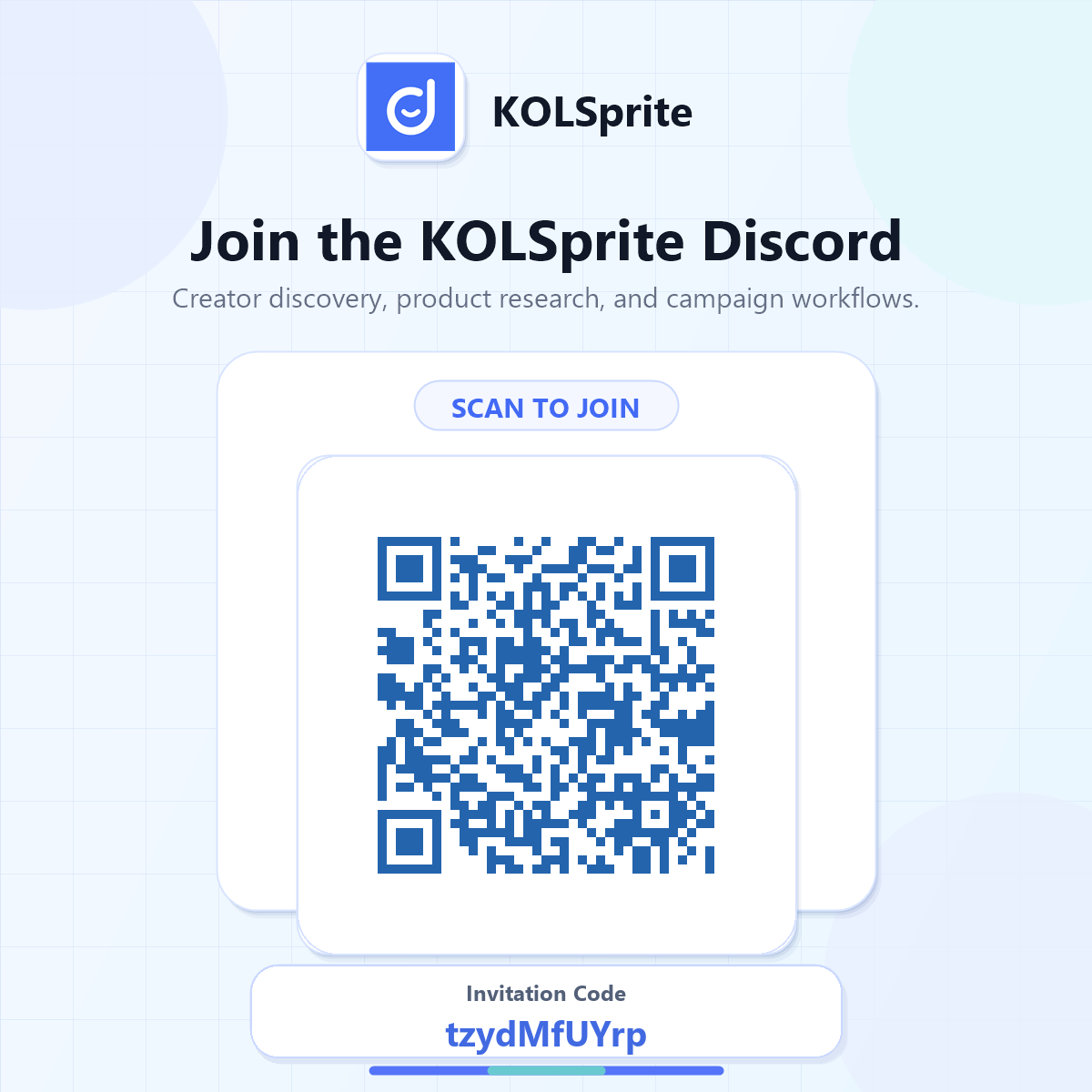
Join the KOLSprite Discord to compare how sellers test, watch, or reject a product signal without treating attention as guaranteed demand.
 +
+
Join the KOLSprite Discord community
Keep the memo to one page. Begin with the product hypothesis in ordinary language: “People may respond to this item because it makes a visible before-and-after easier to show.” Then list the four gate statuses, the saved examples, the dates reviewed, and the commercial owner responsible for the internal check.
Finish with one decision sentence. A test decision names the cap and the next evidence date. A watch decision names the signal that would reopen the case, such as distinct creator adoption after a week. A reject decision names the failure, such as a prohibited product claim or a lead time that makes the timing irrelevant. The memo should be readable by someone who did not attend the meeting.
A product team that wants a sharper rejection rule can compare this memo with the TikTok Shop product research rejection test. For a broader pattern of timing review, see the test, watch, exit approach to TikTok trend analysis.
KOLSprite can help gather current public product and video signals, compare recency and repeated proof, inspect creator participation, and save research evidence. Its browser extension is useful when a reviewer is already examining TikTok results or a creator profile; the web platform can support more concentrated research and comparison. Those outputs help the team see the public record behind a hypothesis.
KOLSprite does not determine whether the item has demand, can be sourced, will be profitable, or should receive inventory. It also does not turn a public sample into representative market coverage. Keep those boundaries in the memo, especially when the product carries a high return, compliance, or fulfillment risk.
Teams that need to relate the research to seller validation can use this guide to TikTok Creative Center seller validation. The handoff should still end with a person who owns the inventory decision.
The common failure is treating the first visible signal as a reason to skip the gates. Another is building a large spreadsheet with no decision owner. Both create delay dressed up as diligence. A short memo with explicit limits is harder to admire, but easier to use.
When the gates pass, the next move is a small test with a named owner and review date. When one gate is unresolved, watch the signal and preserve the reason. When commercial constraints fail, reject the lead even if the clips continue to circulate. That is the discipline that lets TikTok trending products inform sourcing without directing it.
Give the test one purpose. A sample order may answer whether the item can arrive in the stated form. A small product page may answer whether shoppers understand the use case. A limited creator brief may answer whether a truthful demonstration can be made. Keep those questions apart. One test rarely answers all of them.
Set a date to read the result. The owner should bring back the original memo, the work that happened, and the evidence that changed. A small test can fail for a clear reason. The item may be hard to show. The cost may be wrong. The lead time may make the trend late. Clear failure is useful because it stops the team from spending more to defend an old guess.
Watch decisions also need a date. Without a date, watch means the idea is still sitting in a list with no one looking at it. Name the signal that would reopen the case. It may be a second wave of distinct creators, a new use case, or a confirmed change in the commercial file. Do not reopen it because another clip appears on one person’s feed.
The memo should also name the person who can say no. That person may be in sourcing, product, legal, or operations. Their role is to check the part of the choice that public research cannot settle. When that owner declines the lead, close the memo. A trend can be interesting and still be the wrong product to buy.
Over time, these short records become a better guide than memory. The team can see which kinds of public proof led to a useful test, which signals came too late, and which constraints ended the work. It will still need judgment. The record simply gives that judgment a place to stand.
Use a fixed review form that records what the team saw, what it did not see, and the one fact still needed. The form keeps an urgent signal from blurring the open questions.
Attach each public example to the claim it supports: a clip may show a use case, a caption may preserve the wording, and a comment may reveal a question. None can approve a supplier or confirm a return rate.
Make the cap operational by stating how much stock, time, or creative work the test may use, what happens at the limit, and who has permission to stop. Without that final name, the cap is only a number on the memo.
Latest Articles
As an essential, data-driven toolkit for TikTok influencers and marketers, KOLSprite provides powerful features for effortless creator discovery, trending content identification, and actionable real-time insights.
It empowers users to make smarter decisions and significantly boosts their TikTok business.

 Refer & Earn