 +
A small business owner who also posts as a creator faces a choice: should the brand use a business account, or should everything stay on a personal profile? The answer depends on what the account is for and what it will post. The music you see in the app matters too, but it does not remove the need for rights.
For a TikTok business account vs personal choice, first decide who owns the profile and whether its main job is promoting a product or service. Then check the actual tools and audio permissions for the planned content. Do not choose a type simply because someone promises it will get more views.
A personal profile might be where a founder shares hobbies, talks with friends, or builds an individual creative presence. A business profile can represent a store or service. Some owners may want both, but two accounts also mean two profiles to maintain, two content plans, and a clear decision about where customers should get help.
One musician described this tension in a public discussion: the poster wanted to use personal audio while also considering advertising and links. That is one person's question, not a study of business owners. It does show why a simple answer based on account labels may miss the actual work the account needs to do.
Write down the next three posts you plan to make. For each one, note who is speaking, what the post promotes, and who must manage the account. The answer can be mixed. A founder's personal story and a product ad may appear in the same week, but they are not automatically the same kind of post.
TikTok's business help page describes how the sound selector differs. It says a business account sees sounds from the Commercial Music Library when starting a video and adding sound. A personal account sees all sounds and can choose commercial sounds from the available selector.
| Account described by TikTok | Sound picker described in its help page | What still needs checking |
|---|---|---|
| Business | Commercial sounds are shown when adding a sound | The planned use and applicable music terms |
| Personal | All sounds are shown; commercial sounds can be selected | Whether the chosen sound is cleared for the actual commercial post |
TikTok's help article describes the selector, while its separate commercial music guidance explains the limits for business use. Account features and access can vary, so check the current rules for your account and market.
The difference is easy to miss. A sound in a personal account's picker is not cleared for every ad or brand post. TikTok's commercial music guidance says businesses should use its Commercial Music Library for commercial TikTok activity. If you use someone else's original sound or other licensed audio, check that you have the needed rights.
That matters even when the owner of a product also appears in the video. The sound choice belongs to the use of the content, not just the identity of the person holding the phone. The examples here explain the platform's published guidance; they do not replace advice about a particular license.
Account comparisons often claim that one type gets more reach. That can sound tempting when a new page gets few views. But the account label alone cannot prove it. Content, audience response, and distribution all differ between posts.
Choose an account for the work it must support. Then inspect your own available tools and results. If a feature is important, check whether it appears for your account, region, and device before building a plan around it. A public comparison article can point you toward a question; it cannot guarantee that a feature will be available to you.
Be careful with analytics claims in particular. It is easy to read an old comparison and assume personal accounts have no insights at all. TikTok's current help information describes analytics for eligible account types, but access and the exact interface can change. Check the platform's current help material and the account itself rather than treating a screenshot from another year as a contract.
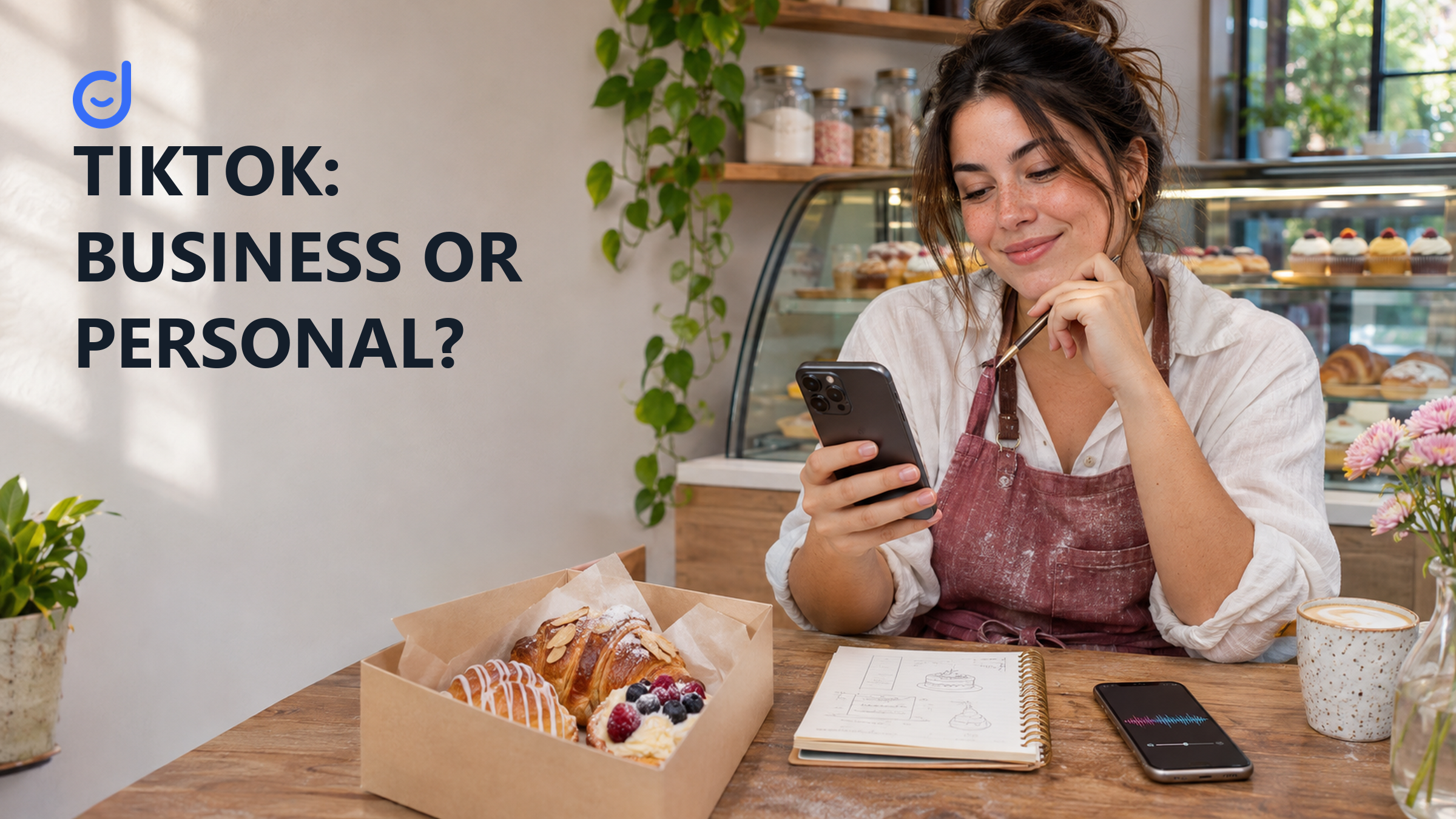
Imagine a baker who posts personal recipes and also runs a small cake business. This is a hypothetical example. The baker wants to show the shop's products, but also wants a place for personal cooking experiments. There are two practical options to consider.
With one clearly branded account, customers have one place to find the business. The owner has fewer profiles to update, and a single content calendar may be easier to maintain. The tradeoff is that personal and business material share a public home. The owner still needs to check the rights for each commercial post.
With separate profiles, the shop can present a consistent business identity while the owner keeps a distinct personal space. The cost is extra maintenance. Each profile needs a purpose, current information, and a person responsible for it. Splitting accounts also does not make a promotional post noncommercial just because it appears on a personal profile.
Before making the choice, look at who needs account access and what happens when a customer asks for help. If the brand has a team, record how ownership and access will be handled. Do not share passwords casually. Use whatever access controls the platform currently provides and confirm their availability directly.
For the next decision, choose a research tool
Use these questions to settle the immediate setup rather than chasing every possible feature. Write down the answers for the account you plan to use first.
If the main role is representing a store, begin by reviewing TikTok's current business-account guidance and its commercial music rules. If you also need a personal creative space, decide whether maintaining a second profile is worth the work. Keep the reason in the plan so that the team does not switch back and forth just because one video underperforms.
If you cannot confirm a feature, treat it as an open setup question. Check the account on the device you will use, then consult the latest official help. That is more useful than promising a tool to a team because a third-party blog listed it.
An account type is the starting point, not the content plan. For the baker, the first business post might show how a cake is packed for pickup. The video can answer one real customer question, and the caption can point viewers toward the correct next step. Use only music and other material the business is allowed to use for that post.
Decide what the team will observe before the post goes live. A view is exposure; a visit is a separate action. Neither proves that someone placed an order. If a visitor is expected to ask a question or see a product page, make that path clear and make sure someone can respond.
The first TikTok marketing test guide can help connect the post to a specific question. If the team is choosing where shoppers should complete a purchase, compare the social commerce operating choices. For a later research task, the TikTok tools decision guide separates common research needs.
For the TikTok business account vs personal decision, choose the account for its real purpose. Check the tools you need and the music rights for the post you plan to publish.
Newer Article
<<Influencer Marketing Budget: Price the Whole Test
Latest Articles
As an essential, data-driven toolkit for TikTok influencers and marketers, KOLSprite provides powerful features for effortless creator discovery, trending content identification, and actionable real-time insights.
It empowers users to make smarter decisions and significantly boosts their TikTok business.

 Refer & Earn