 +
+
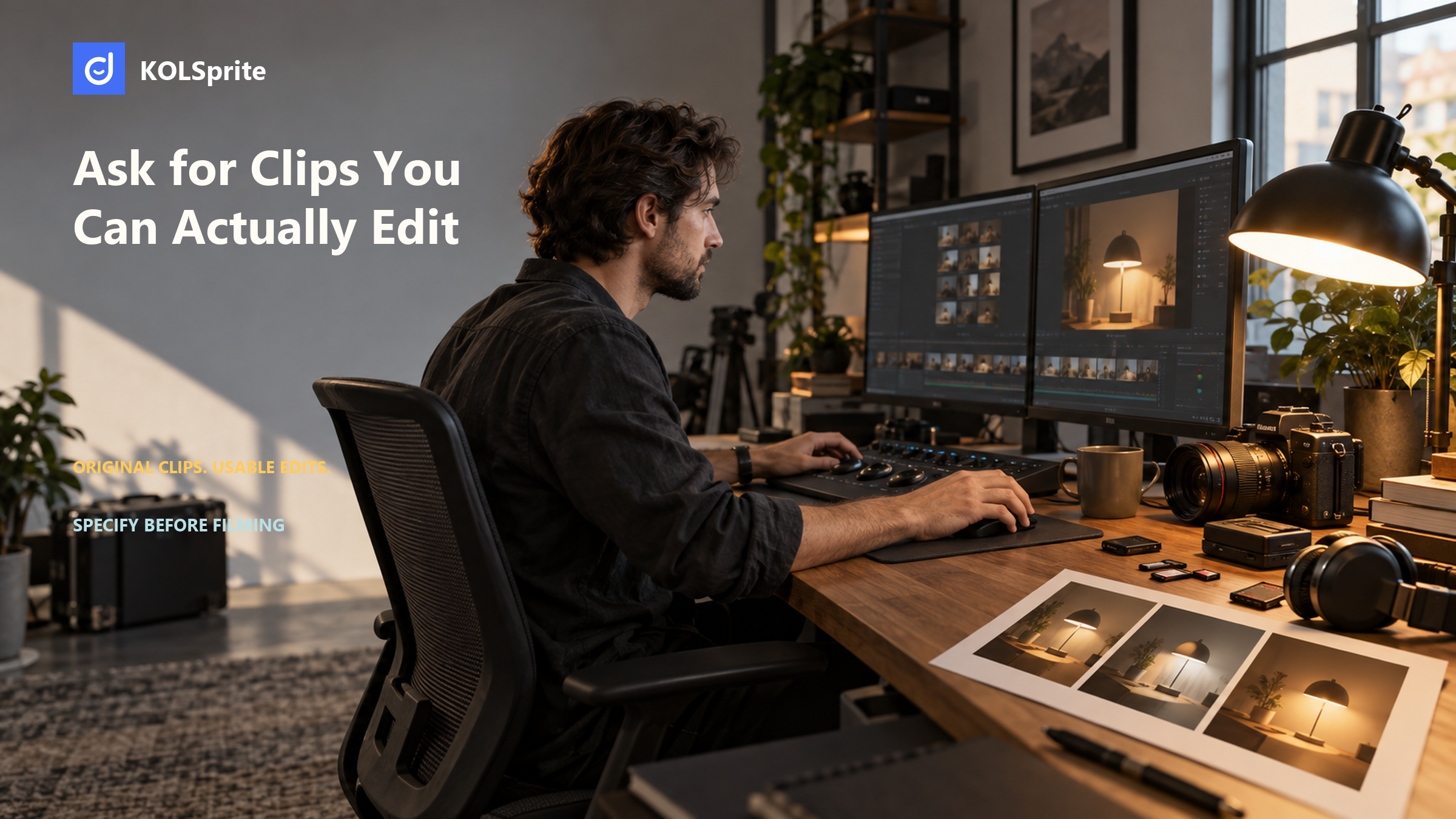
Before the creator films, start with the edit you need to make. Then ask for the shots that make it possible. This order keeps UGC raw footage useful. It also stops an in-house editor from receiving a large folder with no clean hook, no full action, and no result that can hold on screen.
Direct answer: agree on clean vertical takes, needed angles, and clear starts and ends before the shoot. Keep a file when it preserves an edit choice. Ask for it again when poor focus, blocked action, or a baked-in effect removes that choice.
An unedited file is not automatically flexible. A six-minute camera roll may contain one rushed performance with the product off frame. Ten clips may all use the same angle. A clean-looking export may have music, captions, transitions, or color effects baked into the image. Each can be described as raw in casual conversation, yet none gives the editor the choices assumed in the brief.
Define raw footage by the decision it preserves. Can you choose a different hook? Can you hold the product result for another second? Can you remove a line without creating a visual jump? Can you build a version led by voice and another led by product sound? If the delivery allows the planned alternatives, it is useful source material.
This definition also keeps the request proportionate. You do not need every second recorded on set. You need the source clips that support known variations and a reasonable edit. Asking for an undefined dump creates transfer work for the creator and sorting work for the editor without improving the final options.
Ask the editor to name the first alternate cut before the brief is sent. If that cut opens on the result, request a clean result shot with room at both ends. If it uses product sound, request one take without speech or music over the action. These small choices make UGC raw footage easier to shape without adding a long shot list.
| Delivery | Observed distinction | Acceptance question |
|---|---|---|
| Original creator clips | Unedited source material can include multiple takes and vertical filming. | Do the takes preserve the visual and spoken choices in the shot request? |
| Finished ad or video | A composed output reflects selected clips and edit decisions. | Does the finished piece meet the agreed brief, and were source clips also part of the agreement? |
Source note: Insense's raw UGC guide, published February 17, 2026 and checked September 14, 2026, describes original unedited creator clips as distinct from finished ads and discusses multiple takes and vertical filming.
The distinction should appear in the brief and price conversation. “One edited vertical video” does not silently include every original take. “Raw clips” does not silently include a polished ad. Name both when both are needed, and confirm the relevant permissions separately rather than treating file possession as unlimited usage.
Break down one relevant TikTok script with KOLSprite, then turn its missing proof beats into an original shot request for your creator. Use desktop Chrome. On a phone, open this article on your computer to install the extension.
Write the first two or three intended versions before creating a shot list. Perhaps the main cut is a problem-solution demo, the second begins with the result, and the third is a quiet product-sound version. Under each version, mark the footage that cannot be shared. The result-first cut may need a clean beauty shot with no spoken hook. The product-sound cut may need the mechanism recorded without music or narration.
Now identify common material. All three versions may use the same package opening, application sequence, and result. Request one strong master take plus a second angle only where it changes editability. This creates a minimum shot request tied to output, not an endless wish list.
Give each shot a job, framing, action, and clean-handle note. For example: “Medium vertical shot; creator places lamp on desk and switches it on; hold two seconds before touching it and three seconds after light reaches full brightness.” The handles let the editor enter and leave the shot without cutting through a hand movement.
| Requested source clip | Cut one: desk problem | Cut two: product-first | Acceptance detail |
|---|---|---|---|
| Wide desk before the lamp turns on | Establishes a dim work area. | Optional. | Two seconds clean before the hand enters. |
| Close shot of switch and light response | Proves the action. | Works as the opening hook. | Switch, finger, and light change stay in focus. |
| Medium shot adjusting the lamp arm | Shows use after setup. | Explains the feature after the hook. | Full movement remains inside the vertical frame. |
| Clean lit-desk result | Closes the change. | Supports a product-led ending. | Three-second hold with no spoken line or camera move. |
Example note: this September 14, 2026 teardown shows how a small set of original clips could enable two cuts. Adapt the actions and holds to the real product and agreed production scope.
The switch close-up does the most work because it can lead the second edit and prove the mechanism in both. The wide opening matters only to the problem-led version. That makes it useful but not a reason to request five wide takes. The clean result is valuable because it can sit under different voiceover or end without speech.
The teardown also shows why clean handles belong in the request. Without the two-second pre-roll, the wide shot may begin after the hand has entered. Without the final hold, the editor cannot extend the result or place a closing line over a stable image. These small capture choices create more value than receiving another nearly identical performance.
Bring the handoff detail your editor keeps missing and compare a clearer way to request it before filming.
 +
+
Start with technical use. Confirm that the file opens and plays from start to finish. Check that it has the agreed orientation and resolution. When sound matters, make sure the words and other key sounds are clear. Next, review creative use. The subject should be in focus, and the full action should stay in view. You must be able to judge the product detail. The clip also needs enough clean time before and after the action.
Keep the clip if it does its planned job, even when every frame is not perfect. A natural glance or a short pause may be simple to trim. Ask for the clip again when post work cannot restore a missing choice. Do that if a hand hides the mechanism or the focus moves during the result. The same rule applies if the action starts before recording, a required line is missing, or branded text is baked over the product for good.
Make every request specific. “Please redo shot 04” gives the creator no correction. “Please repeat shot 04 from the same vertical angle, keep the hinge and both hands visible, and hold the locked position for three seconds” gives a clear path. Refer back to the agreed shot rather than expanding scope during acceptance.
Rights are a separate checkpoint. Receiving an original file does not by itself define where, how long, or in what form the brand may use it. Review the agreement and the guide to confirming content usage rights. Acceptance of pixels and permission to publish are related but distinct decisions.
KOLSprite workflow: choose one public TikTok demo with a spoken setup and proof sequence close to the asset you need. Use script breakdown to identify those beats. Compare them with your intended cuts, list the spoken or visual material your plan is missing, and request original creator footage that fills those needs. The output is an original creative decision with a concrete shot example.
Name each gap in the KOLSprite notes, then convert it into a shot, angle, or clean-handle request the creator can follow.
The reference may show that a claim becomes understandable only after a close product action, or that the result needs a quiet hold after the speaker stops. Translate that lesson into your shot language. Do not ask the creator to copy the reference performance, wording, or sequence. Your product may need different proof and a different pace.
Limit: KOLSprite does not supply source files, editing licenses, or rights to other creators' content. A script breakdown cannot reveal off-camera takes or repair a missing angle. It supports planning; the brand and creator must agree the delivery and permissions.
Prepare the production relationship by agreeing a creator brief. When spoken structure matters, review a permitted reference transcript, then turn the observation into new language and a shot request suited to your product.
A minimum request for many demos can fit on one page: one clean hook take, one complete product action, one close proof detail, one result hold, and any alternate angle required by a named second cut. Add orientation, framing, sound, and handle notes only where they affect acceptance. Put file naming and delivery details in a short final block.
Before sending it, trace each requested clip to an edit. Remove shots that serve no planned version. Add a shot only when its absence would force a reshoot or make a promised variation impossible. This protects the creator from unnecessary capture and keeps the editor from sorting footage that has no job.
Open the planned timelines when the files arrive. Place each needed shot where it belongs. Keep the clips that let both cuts work, and request only the missing proof. UGC raw footage has done its job when the editor can change the opening, action, or close without pretending a lost moment exists.
Latest Articles
As an essential, data-driven toolkit for TikTok influencers and marketers, KOLSprite provides powerful features for effortless creator discovery, trending content identification, and actionable real-time insights.
It empowers users to make smarter decisions and significantly boosts their TikTok business.

 Refer & Earn