 +
+
An ecommerce team should define TikTok creator proof before it sends outreach. Name the buyer doubt and the product action the camera must show. Then set the claim boundary, disclosure plan, and usable output. Review whether a creator's public work shows that they can film the job. You will leave with a one-page brief and a clear outreach gate, so follower counts do not stand in for demonstration fit.
Advance a creator when their work fits the audience and shows the product step buyers need to see. The concept must also allow a clear disclosure. Popularity may help a post travel, but it cannot show that the creator can film the buying reason.
Creator selection gets vague when the brief begins with a demographic and a content category. “Beauty creator with an engaged audience” is not enough to guide casting. Add the unresolved doubt: Can this compact tool complete the relevant step without making the routine harder? Now the team can inspect public work for camera placement, pacing, explanation, and honest handling of tradeoffs.
The doubt must be narrow enough to film. Broad goals such as “build trust” or “drive awareness” describe campaign hopes, not creator proof. A filmable doubt points to an action: setup, fit, cleaning, assembly, application, comparison, or use in context. The creator does not need to have reviewed the same product. The useful signal is whether their established treatment can show the required action clearly.
TikTok for Business covers creators in the purchase journey. TikTok Shop offers US learning material for sellers who work with creators. These guides help explain the business role. Your team still needs to check product fit, discuss rights, and get private performance data from the right source.
Write the proof brief before comparing names. It should fit on one page and give every reviewer the same standard.
The TikTok creator proof brief is a casting tool before it becomes a production tool. During shortlist review, ask whether the creator's public work makes comparable actions easy to inspect. After selection, discuss the actual concept, compensation, usage, timing, revisions, and other terms directly. A public post grants no consent or reuse rights.
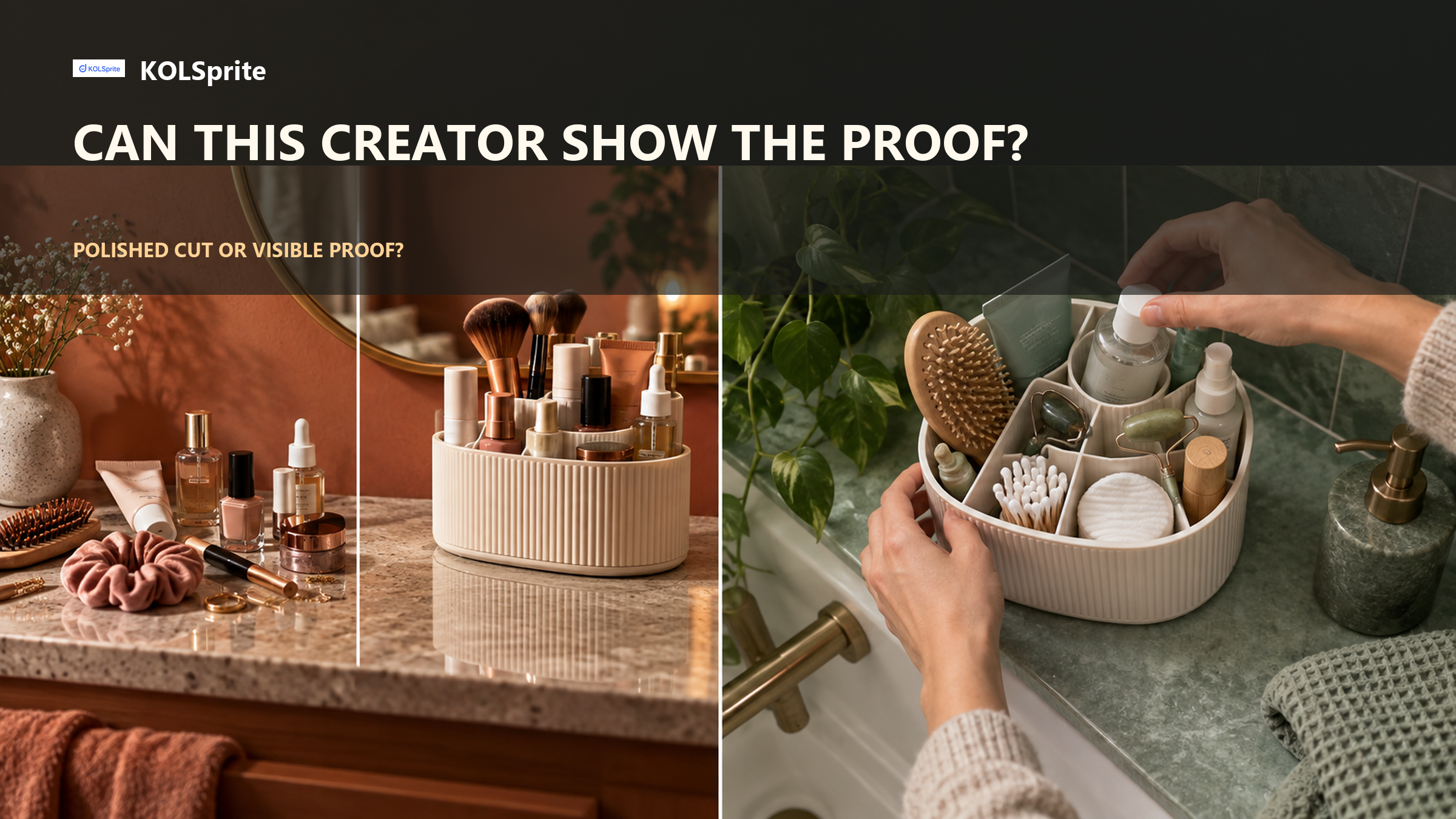
The following comparison is explicitly hypothetical. It contrasts two possible treatments for the same compact styling accessory. Both treatments are invented; they represent no real creator, account, audience, or outcome.
| Brief element | Treatment A: fast transformation | Treatment B: guided demonstration | Casting decision |
|---|---|---|---|
| Buyer doubt | Hints at an easy result but never names the hard step. | Names the setup concern and addresses it. | B is aligned. |
| Demonstration sequence | Jumps from package to finished look. | Shows starting state, placement, adjustment, and removal. | B makes proof visible. |
| Claim boundary | Uses “works for everyone.” | Describes the shown use and personal result. | A requires a rewrite; B is closer. |
| Disclosure | Leaves disclosure placement undefined. | Reserves clear on-screen and spoken disclosure. | Only B is ready for terms review. |
| Usable output | Promises a polished post without defined review or rights. | Defines a draft demonstration and separately negotiated usage. | B creates a workable outreach basis. |
| FTC source | Documented boundary for a creator brief |
|---|---|
| Disclosures 101 | A free product can be a material connection; disclosure belongs with the endorsement, not only on a profile page. |
| Endorsement Guides Q&A | For a TikTok video, a disclosure only in the small text description is unlikely to be clear and conspicuous. |
Source note: The linked FTC guidance informs the disclosure line in the brief. The casting comparison is an illustrative decision exercise, not observed creator performance.
That distinction changes the shortlist. A creator who can show the product well but refuses a visible disclosure needs a different agreement or a different concept. Resolve it before the team pays for a shoot, when the script and framing are still easy to change.
Install KOLSprite for Chrome, inspect a permitted public reference, and carry the observed proof pattern into a human-reviewed brief. Use desktop Chrome. On a phone, open this article on your computer to install the extension.
Review a few public videos that ask the creator to show a similar product step. For a hands-on item, can you see the action from start to finish? Does the creator explain what might change the result? For a comparison, check that both products get a fair test. In a routine video, the product should do a visible job, not sit in the background.
Write down what you can see. “The creator shows setup in one overhead shot” is a fact about the video. “This creator will win customers” is a guess. If comments ask about cleaning, record that question. It tells you what a new video might need to show, but it does not tell you who will buy.
Check audience fit with care. Public posts can show the topic, tone, common questions, and how people interact in comments. They cannot tell you who every viewer is or give you private audience data. Ask the creator or their agent for the right details during outreach. Judge those details by your own standards. Follower count cannot fill the gaps.
Reference research should produce a note that a partnerships lead can audit. Begin with permitted creator videos, scripts, and public comments relevant to the product use case. Record the URL, the observed demonstration pattern, the language used around the buyer doubt, and the limitation of the observation. Avoid copying expressive script language into the brand brief.
Use permitted public creator videos, scripts, and comments tied to the product use case as KOLSprite inputs. Inspect how a creator shows the relevant action, then write a sourced note. The partnerships lead decides whether to advance, request more information, or reject the fit. Rights and terms still need direct discussion.
A good note may show that a creator often films setup before the result. It may also show the product in use and clear accounts of personal experience. List what you still do not know: who follows them, whether they are free, their fee, their rights terms, and whether they will follow the claim limits. The note makes outreach more specific. It does not settle the deal.
Use the note alongside rejecting weak creator-product fits and matching creators to demonstration needs. The first protects the shortlist; the second sharpens the production match.
KOLSprite organizes public-content evidence. It cannot access private creator analytics, guarantee performance, verify audience identity, negotiate rights, or approve product claims. Those decisions remain with the creator, brand, and qualified reviewers.
Discuss the proof job without sharing private creator or campaign data.
 +
+
A single score can hide a fatal mismatch. Use gates instead. Gate one asks whether the public work suggests a plausible audience and subject fit. Gate two asks whether the creator can show the required action. Gate three checks whether the proposed execution can stay within the claim boundary. Gate four confirms that clear disclosure and commercial terms can be discussed. A creator advances only when each gate has enough support for outreach.
Ready for outreach does not mean ready to produce. Use outreach to check interest, product experience, the creative plan, audience details, dates, pay, disclosure, review steps, and rights. A good public review does not mean the creator will accept a paid brief. A clear product demo does not give the brand the right to reuse the finished content.
Write the reason for rejection in plain terms. “Large audience but key product steps are routinely hidden by cuts” is more useful than a low fit score. “Strong demonstrations, but the proposed universal claim exceeds our evidence” tells the team whether a narrower brief could work. Reasons create a better next action.
Consider a hypothetical travel organizer. The buyer wants to know whether a full case will still zip shut. One creator has polished packing videos, but each cuts away before the zipper closes. Another keeps the full closing step in frame and explains what fits. The second creator has a stronger match for this proof job, even if the first has more followers. That is a reason to start a conversation, not a reason to promise a sale. In outreach, ask whether the creator would film the case with the actual items the brand can supply. Ask how they would show a failed first try if it happens. The answer reveals whether the brief can stay honest without turning the creator into a script reader. If neither creator can show the closing step, change the brief or keep searching rather than settling for a beautiful but inconclusive video.
Disclosure should be hard to miss and easy to understand. The creator and brand need to plan it as part of the content, with attention to the current guidance and the actual material connection. Do not rely on an unclear abbreviation or a placement viewers may skip. Legal and policy review should match the real engagement.
Give the creator the facts your brand can support and the product step viewers need to see. Flag claims the video cannot support. The creator can still speak in their own voice. If the concept needs a dramatic result the product cannot show honestly, change the idea before you agree on production.
Define the output without assuming rights. State what the creator would make and where it may appear only after terms are agreed. Product gifting, an organic mention, a commissioned post, and licensed brand usage are different arrangements. The next guide on separating seeding from purchased content helps keep those expectations clear.
A creator shortlist becomes commercially useful when each name is tied to a product question that can be filmed. Write the five-part brief first. Compare observable public treatment against it. Preserve the unknowns for outreach. Then advance only the creators who can plausibly make the proof clear, the claim responsible, the disclosure visible, and the output negotiable.
Older Article
TikTok Content Ideas: Four Proof Jobs for Products>>
Latest Articles
As an essential, data-driven toolkit for TikTok influencers and marketers, KOLSprite provides powerful features for effortless creator discovery, trending content identification, and actionable real-time insights.
It empowers users to make smarter decisions and significantly boosts their TikTok business.

 Refer & Earn