 +
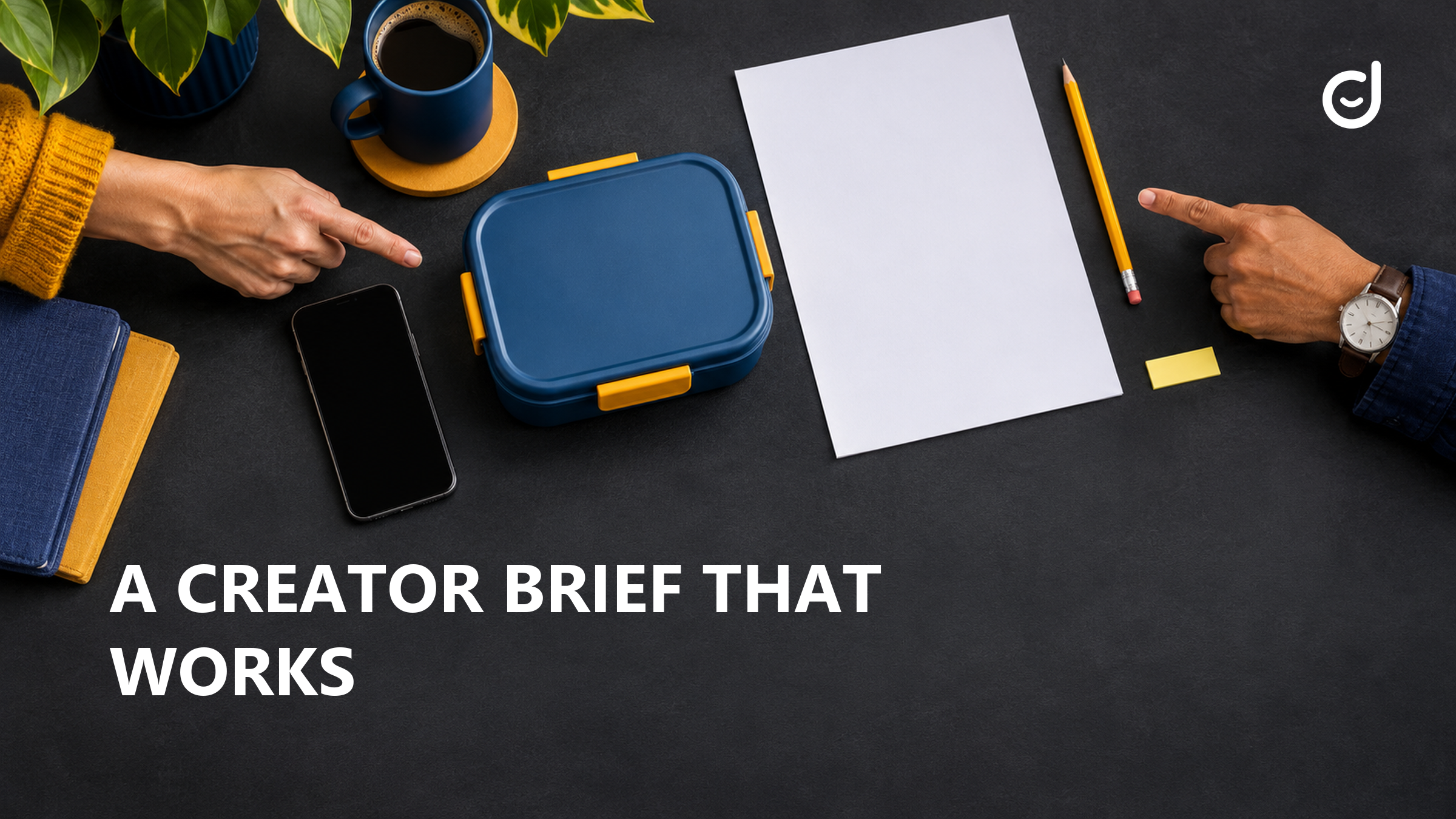
A creator has agreed to discuss your product. Now you need to explain the work without sending a script that sounds nothing like them. A useful influencer brief template does two things: it gives the creator the facts and deliverables they need, and it leaves room for their own way of telling the story.
Write down the buyer question, the product proof, the deliverables, the review dates, the agreed usage terms and the disclosure expectations. Resolve missing facts before filming, rather than asking the creator to guess.
The example below is fictional. Use its structure as a starting point, then replace the details with the actual product and terms you and the creator agree on.
| Brief field | Illustrative handoff |
|---|---|
| Product and audience | A lunch container for people who carry food to work. |
| Buyer question | Can I close it and carry it in my bag without making a mess? |
| Proof to capture | Show the actual lid being closed and the container placed in a bag. |
| Claim boundary | Do not claim the container is leakproof unless the brand can support that claim. |
| Deliverable | One proposed short video; format and final length to be agreed. |
| Review and timing | Agree on a draft date, one point of contact and a posting date before shipping the item. |
| Use and payment | Record the agreed fee, planned channels, editing rights and any paid-ad use separately. |
| Disclosure | Identify the material connection and the required platform disclosure for the actual post. |
This is a planning document, not a contract or legal advice. In a real collaboration, replace every placeholder with the agreed detail. If you do not yet know whether you want to run the video as an ad, say that the use is undecided. Do not treat silence in the brief as permission.
A short handoff also needs an owner. Name the person who can answer product questions and approve factual claims. If three people give conflicting feedback after the creator films, even a careful brief cannot prevent confusion.
“Show the product” is an instruction, but it does not tell the creator what a viewer needs to learn. A question gives the video a useful job. For the fictional container, a viewer may want to see how the lid closes or how much space the item takes in a bag. For a real product, use a question your team can support and the creator can answer honestly.
Choose one main question for each piece of content. A single video does not need to prove every feature, explain every variant and deliver a full brand history. Give the creator a clear priority, then let them propose an opening and setting that fit their audience.
Supply the facts that make that freedom safe. Which product version will arrive? What is included? Which measurements are correct? If a claim needs evidence, provide it or leave the claim out. A creator cannot turn an uncertain product claim into a reliable one by saying it confidently.
For image-based examples, the product photography guide explains how a clear product view and a scene of use can answer different questions. The same distinction can help when you decide what a video needs to show.
For the next decision, personalize creator outreach
Tell the creator what you need to receive. Is the request for a post on their account, a video file for the brand, or both? These are different deliverables. State the proposed format, the version of the product, the expected delivery date and the agreed payment. If your team needs time to check a claim, include a realistic review step.
Then name the choices you are happy for the creator to make. They may prefer to speak to camera, show only their hands, or use a familiar setting. Those details can make the content feel natural to the people who already watch their work. The brief should not require a personal story the creator has not experienced.
Use examples to explain a standard, not to demand a copy. If a previous image shows the angle needed to see a lid, say why that angle matters. If a reference only communicates a mood, make that clear too. Confirm that you have permission for any material you send or plan to reuse.
Before the shoot, separate what the creator is making from how the brand hopes to use it. A creator may post a video for their audience, provide a file for a product page, agree to an edit, or authorize a paid placement. These are not automatically the same permission. Put the intended channels, duration, edits and any paid use in the terms you discuss.
Do not assume a public post gives a brand permission to download it, change it or run it as an advertisement. The right arrangement depends on the parties and their agreement. A brief is a good place to raise the question; it does not replace the agreement itself.
If you have not decided on all future uses, record what is agreed now and what remains open. That is more useful to the creator than a broad phrase such as “all rights” with no discussion of what the brand plans to do. Ask for advice on the agreement where the rights or legal requirements are unclear.
Payment is not the only kind of connection that matters. The FTC's influencer guidance describes material connections that can include free or discounted products. Its guidance says that a creator who receives a free or discounted product and then mentions it should disclose the relationship, even if the brand did not ask for that specific mention.
| Source | What it addresses | Briefing implication |
|---|---|---|
| FTC guidance | Disclosure of relevant material connections in endorsements. | Tell the creator what was provided and discuss a clear disclosure. |
| TikTok guidance | The platform's disclosure setting for promotional content. | Check the current setting and the actual post before publication. |
Sources: the FTC and TikTok's promotional-content guidance, checked November 9, 2026. This comparison is not legal advice.
TikTok says content promoting a brand, product or service must use its disclosure setting. The platform setting and the legal guidance address related but distinct questions. Discuss both for the actual post, and do not assume that tagging a brand alone explains a material connection to viewers.
Read the brief as the creator will receive it. Can they identify the product and the one thing the viewer needs to understand? Do they know what they are expected to deliver, when to send it, and whom to contact? Have both sides discussed the planned use and any disclosure? If an answer is missing, assign someone to resolve it before asking for a finished video.
In the fictional lunch-container example, the brief might be ready once the product version, shipment date, fee, review contact and planned use are agreed. It is not ready if the brand expects an ad but has only discussed an organic post. It is also not ready if the brand wants a leakproof claim without evidence to support it.
When the handoff is sound, avoid filling it with extra commands. The creator needs enough detail to work accurately and enough room to make the piece understandable in their own voice. A useful brief creates that balance.
If your team is still at the first-contact stage, use the outreach template to explain why the creator's work is relevant. For a wider program, the creator program guide covers the decisions around managing more than one partnership.
Latest Articles
As an essential, data-driven toolkit for TikTok influencers and marketers, KOLSprite provides powerful features for effortless creator discovery, trending content identification, and actionable real-time insights.
It empowers users to make smarter decisions and significantly boosts their TikTok business.
 Refer & Earn