 +
+
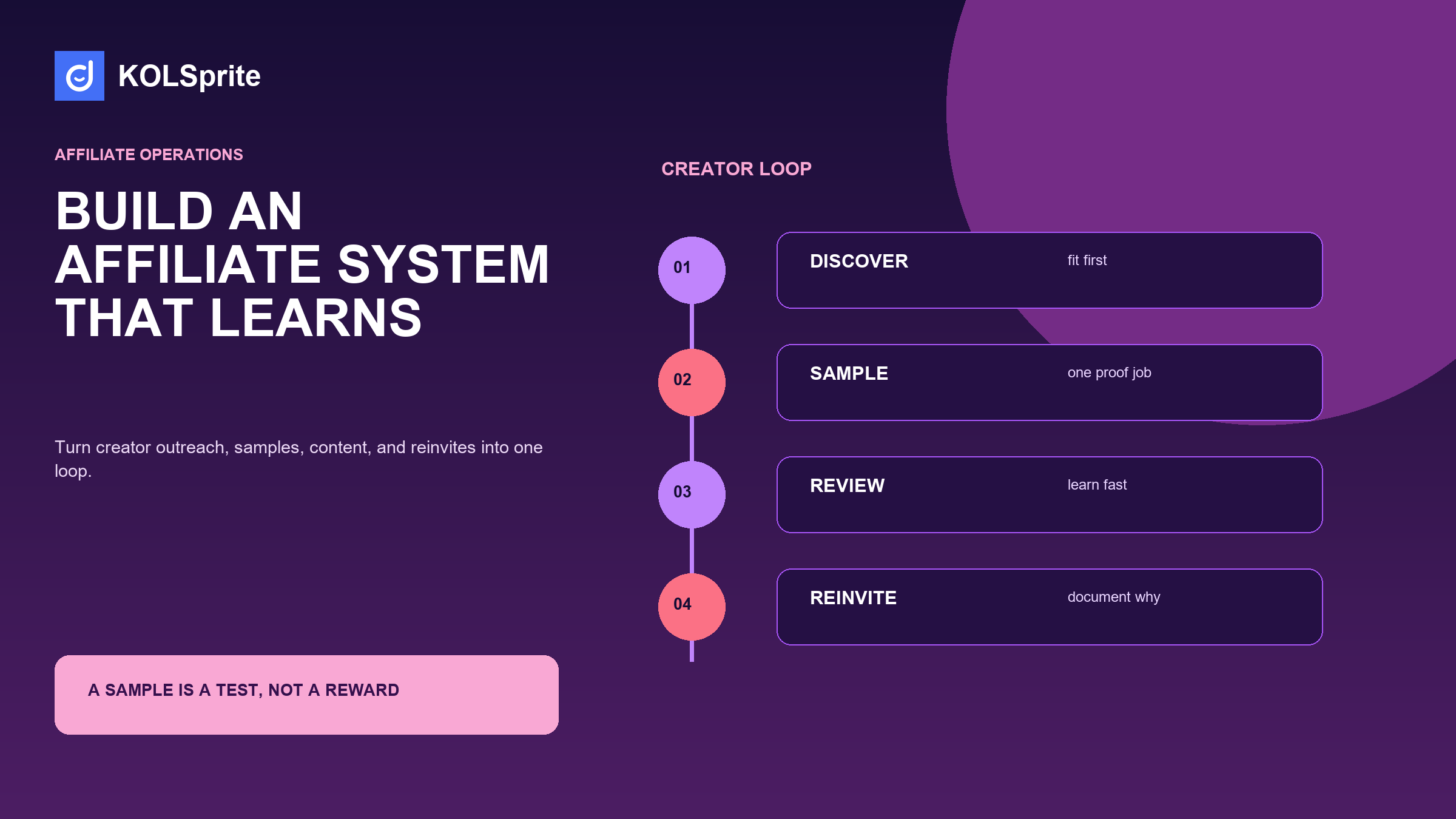
For sellers and content teams, TikTok Shop affiliate program is useful only when it helps make a real choice. This guide shows how to use affiliate operations around a drawer organizer without overstating the data. The direct answer is simple: affiliate outreach becomes expensive when every creator receives the same vague ask. By the end, you will have a four-stage affiliate operating system that can guide the next brief, test, or stop decision.
The point of view: Build an affiliate program that learns after every creator. The risk is measuring the program by messages sent instead of by useful learning and credible proof.
For a drawer organizer, the request is not ‘make a nice video.’ It is ‘show how the divider fits a real drawer and what changes after setup.’ That promise helps the seller identify creators with a plausible filming environment and a useful audience context.
For the drawer organizer question, write one line naming the buyer job, visible proof, and claim limit. Keep that line beside the four-stage affiliate operating system so the brief stays tied to a real use case.
Do not promote the affiliate operations phrase into product copy until the drawer organizer shows the promised action in the buyer setting: a small kitchen, a crowded drawer, and a before-and-after reset.
A sample should have a named question, proof need, due date, and review point. The point is not to control the creator’s voice. It is to learn whether the product can be shown in a way that resolves the buyer’s likely doubt.
Test the idea in a small kitchen, a crowded drawer, and a before-and-after reset. Ask what a colleague would need to see before accepting it, then turn that answer into one check inside the four-stage affiliate operating system.
If the drawer organizer example works only in a polished setup, mark that limit. The four-stage affiliate operating system must survive a normal buyer condition, not only a perfect demo.KOLSPRITE_TRIAL_CTA
Try the affiliate operations workflow with a real decision.
New KOLSprite users can claim a three-day trial membership to compare the product, creator, and video evidence behind one drawer organizer question.
Start your three-day trial
Look for the piece of detail the video produced. Did it reveal a fit problem, a clearer use case, or an objection that should move into the next brief? Reach matters. But a smaller post can be more useful when it improves the program’s next decision.
At the affiliate operations handoff, attach the source and next owner. That keeps review the first output for learning open to a later check instead of turning it into a takeaway nobody can revisit.
Keep the original wording beside the four-stage affiliate operating system. That lets the team separate what was observed, what was inferred, and what still needs a test.
Label each relationship: repeat the same proof, test a new proof, hold for another category, or close the thread. This prevents a creator list from becoming a pile of names with no team memory.
If the drawer organizer result is weak, record the missing proof, fit, offer, or cost beside the four-stage affiliate operating system. A precise failure note prevents the next browse from repeating the same mistake.
A weak affiliate operations result can still teach the owner what to change. Record the missing drawer organizer fact instead of smoothing it over with a stronger headline.
| affiliate operations field | What to record | Decision it supports |
|---|---|---|
| Observed signal | the reviewed organizer record linked 4,077 recent product units with short creator-led demos | Whether the drawer organizer example deserves closer review |
| Proof need | One visible action in a small kitchen, a crowded drawer, and a before-and-after reset | What the next brief must demonstrate for this use case |
| Known limit | measuring the program by messages sent instead of by useful learning and credible proof | What the team must check outside public platform data |
| Next action | a four-stage affiliate operating system | A named test, hold, or handoff for this decision |
Affiliate Operations source note: KOLSprite MCP public US-market snapshot for the drawer organizer, accessed August 7, 2026. This example shows how to use a four-stage affiliate operating system; it does not estimate the whole category.
Affiliate content and endorsements need proper disclosure. The FTC’s disclosure guidance is a useful reference point for teams defining creator instructions and review expectations.
Keep the detail that changes the next affiliate operations brief. The four-stage affiliate operating system should make the drawer organizer choice easier to defend, not summarize every signal in the category.
Use the four-stage affiliate operating system to choose one next clip, creator, listing change, or sample check. More examples are not better when the drawer organizer decision stays open.
Want a second set of eyes on the four-stage affiliate operating system?
 +
+
Join the KOLSprite Discord community
Creator research, video review, saved lists, and outreach follow-up belong in the same loop. KOLSprite helps a team find and compare relevant creators. But it does not guarantee replies, publish dates, sales, or creator fit.
Finish the KOLSprite step by naming the next move: test, hold, compare, or stop. KOLSprite can keep the drawer organizer source and creator context near that choice for the next owner.
This operating system is complete when another owner can explain the drawer organizer choice and repeat the check without asking for hidden context.
Pick one product. Pick one creator type. Pick one proof job. Send a short brief. Watch the first post. Write down what the post taught you. Do not send fifty vague messages and call that a program.
For the drawer organizer, the proof job is clear. Show a messy drawer. Show the divider. Show the fit. Show the result. If the divider does not fit, that is useful news. If the creator cannot show a real drawer, choose another creator. These are small checks. But they stop a weak brief from spreading through the whole program.
Use a simple tracker. The first column is the creator. The next column is the room or setting. The next is the proof job. The last is the next step. A sample can be sent. A post can be reviewed. A creator can be reinvited. Each step should have one owner and one date.
Keep reach in its place. A large view count can help. It cannot prove that the product fit, the creator fit, and the offer were all right. A smaller post can be worth more when it shows a buyer doubt that the next brief can fix.
One creator. One room. One proof job. One due date. That is enough for a first test. The team learns more from a clear first post than from a long list of open chats.
For affiliate operations work on a drawer organizer, keep the buyer job intact when the format changes. The TikTok Shop affiliate program question decides whether this source becomes an Amazon brief, a Shopify page test, or a creator request.
Start the drawer organizer handoff with the scene that makes the need obvious: a small kitchen, a crowded drawer, and a before-and-after reset. For a affiliate operations review, ask which action earns belief and which product limit must appear before the viewer accepts the claim.
Give the four-stage affiliate operating system its own source, signal, proof, limit, and next-action fields. In a affiliate operations handoff, that small record shows why the example matters without sending the next owner back through a folder of screenshots.
In this operating system, compare the affiliate operations example with a small kitchen, a crowded drawer, and a before-and-after reset. A high-play result is not enough when measuring the program by messages sent instead of by useful learning and credible proof. Record the proof gap, creator fit, and next choice in the four-stage affiliate operating system.
Run the smallest affiliate operations test that can change the choice. For this affiliate operations work, expand a supported hypothesis, record a failed one, and move on when the drawer organizer evidence stays weak.
A useful TikTok Shop affiliate program process ends with one concrete commitment: who will run the next affiliate operations check, which drawer organizer condition they will review, and what result would alter the plan. Keep the source beside the takeaway for a four-stage affiliate operating system, then decide whether the next move is a test, a hold, or a request for better evidence.
For a related next step, use creator discovery, compare it with creator outreach SOP, and move the resulting decision into campaign tracking. For the platform-level boundary relevant to this operating system, see FTC disclosure guidance.
A good partner can show the item, say who it helps, and explain why it works. That is a better start than a raw follower count.
Send a clear brief. Track clicks, add-to-cart behavior, and buyer questions. Then change one part at a time.
This gives the team a fair way to decide who earns a second test.
Latest Articles
As an essential, data-driven toolkit for TikTok influencers and marketers, KOLSprite provides powerful features for effortless creator discovery, trending content identification, and actionable real-time insights.
It empowers users to make smarter decisions and significantly boosts their TikTok business.
 Refer & Earn