 +
For a brand buying faceless UGC, the first question is not whether a creator will show their face. It is whether the product's value can be shown without one. Hands-only footage suits a visible action, such as fitting a tray into a drawer. A spoken personal account may need a real speaker and real experience. This guide compares those choices so you can commission the right footage, not just a familiar style.
Removing a face can make the product the center of a scene. It can also remove useful context: who is using the item, what problem they have and why their opinion matters. Neither outcome is automatic. A clear demonstration can be more useful than a vague talking head, while a polished close-up can leave a buyer's main question unanswered.
The term often describes creator-made or creator-style content in which no face appears. The video might show hands, a room, a screen or an object in use. It may have a voiceover, short labels or natural sound. That describes the presentation, not who owns the video or where it may run.
Before you compare quotes, name the work you need. A clip for the brand's own account is different from a post on the creator's account. A raw take is different from an edited video. Paid ad use is a separate scope question, not something that becomes included because the person's face is absent. Write these points in the brief rather than relying on a format label.
A useful starting sentence is, “We need a clear demonstration of our organizer fitting inside a desk drawer, with an edited version for our own social account.” You can then discuss the actual deliverables and rights. That is easier to price and review than a request for content that feels authentic.
For the broader relationship between creator footage and distribution, read the guide to TikTok video ideas. Here, the narrower choice is who or what must carry the message on camera.
Take a simple desk organizer as an example. A viewer may want to know whether the shallow drawer will close after the tray goes in. A face does not answer that question. A steady view of the drawer closing can. If the message is about living with the organizer for a month, an honest account of actual use matters more.
Those are different creative jobs. Do not ask a silent close-up to provide a personal recommendation. Do not hire a presenter just to repeat a detail that the product can show clearly. Start with the buyer's doubt, then choose the format that can resolve it with the least explanation.
| Message | Suitable scene | What still needs checking |
|---|---|---|
| This tray fits this drawer. | Hands place the actual tray inside and close the drawer. | The specific tray, drawer and clearance shown. |
| I have used this every workday. | An honest account from someone with that experience. | Whether the person really used it as described. |
| This is a sponsored recommendation. | Disclosure placed where the audience can notice it. | Whether the relationship is clear in the finished video. |
The FTC's endorsement guidance addresses honest experience and disclosure of material brand connections. The scene choices above are editorial examples, not campaign results.
The presence or absence of a face changes none of those basic questions. A voice claiming personal use is still making that claim. A brand-paid demonstration is not independent advice just because the camera points at hands. Review the finished message as a viewer would receive it, rather than treating the shooting style as a shortcut around accuracy.
Open the matched KOLSprite research entry and check current access and supported features; no free-use entitlement is promised. Use desktop Chrome. On a phone, open this article on your computer to install the extension.
Explore the research extension
Consider a hypothetical brand whose organizer has adjustable sections. The audience is a person with a cluttered work desk. The product can solve a small, visible problem: pens and cables get mixed together, and a fixed tray does not fit the available drawer. The brand has not run a campaign in this example, and none of the following choices comes with a claimed performance gain.
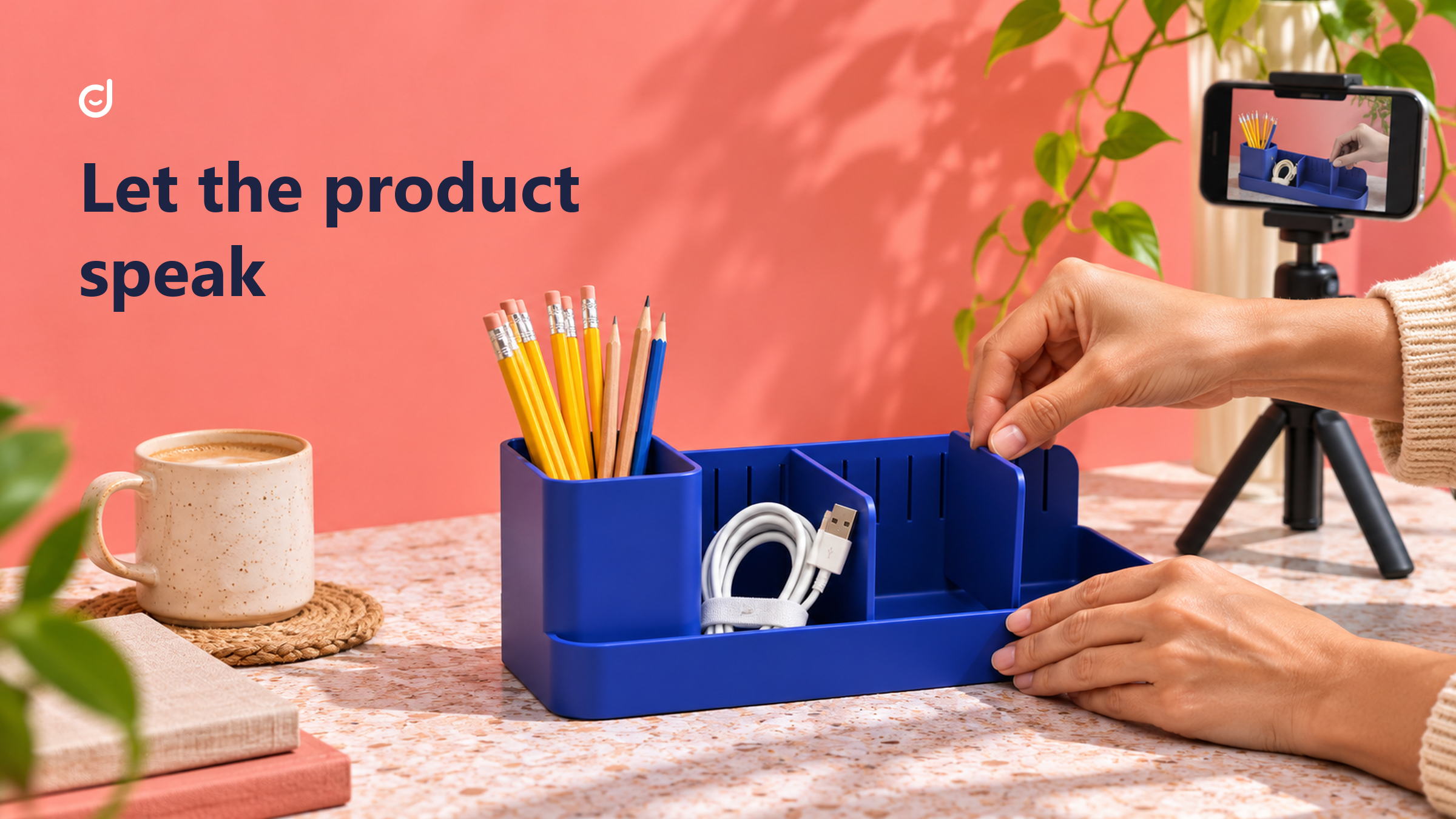
Hands-only demonstration. Ask the creator to show the empty drawer, set the tray in place, move one divider and add the actual desk items. End with the drawer closing. Keep a wide enough view to see the fit. Brief labels can name the adjustment, but the viewer should not need a paragraph to understand the action.
Hands with a voiceover. Use the same action, but let the speaker explain a tradeoff that the picture alone leaves open. For example, the divider moves to make room for a longer cable. The line should describe the observed setup, not claim that everyone will save time or work better. A voice adds value when it supplies context.
A face-led account. Choose this version when the message depends on a real person's routine or preference. Let the creator explain what they needed and show the drawer as part of that account. Do not hand them a false history of using the product. If they have only just received it, make the content a first impression rather than a long-term review.
The brief should say what stays constant across these versions: the same product, the same drawer and the same buyer question. Otherwise, you may compare a strong demonstration with a weak script and mistakenly decide that the face caused the difference. Treat a format comparison as a creative test, not a verdict about what all audiences prefer.
Look past the pleasant background. Can the creator show a small action without covering it with their hands? Do objects stay in the same position across a cut? Can you tell which item is being sold? These details matter because the product must do more of the communication when the person's expression is not part of the scene.
Watch one sample without sound. You should still be able to follow the central action. Then listen to it without watching. That pass reveals whether the voice adds useful context or merely describes the obvious. You are not demanding that every video work identically in both modes. You are finding gaps before the shoot.
Also notice the creator's habits. Some people are excellent at careful close-ups but less comfortable narrating. Others can explain a small problem clearly with an ordinary voice. Choose the relevant skill, rather than assuming that a creator who avoids showing their face offers a cheaper version of every other service.
Ask for a sample that demonstrates the type of action you need, not free speculative work for your brand. If the existing portfolio cannot answer a key production question, discuss a paid test with a clear scope. That creates a fair way to learn about fit without treating a large unpaid trial as a normal requirement.
Join the KOLSprite Discord to discuss the question behind your next research task.
 +
Join the KOLSprite Discord community
KOLSprite's documented subtitle and script research can help a team inspect how a reference video explains the product. Start with a specific question, such as whether the voice adds a reason for the adjustment. Examine the available words, then watch the corresponding action. Turn that comparison into a requirement for your own brief, not a copied line.
The tool supports reference research; it does not film the organizer or verify what a person has used. Spoken text alone does not reveal a hand movement, a camera angle or a hidden cut. Check the current supported inputs and access requirements before relying on a feature. This article does not claim to have tested every current interface or plan.
The practical payoff from a focused KOLSprite reference review is a better question for the creator. Instead of “make it like this,” ask for “a clear view of the divider moving, followed by the cable fitting in the space.” Save that note with its reference link. The first direction borrows a style; the second explains what your own scene needs to show.
For a deeper look at the text-review step, see how to research a video transcript. Keep the reference attached to your notes so a reviewer can see where an observation came from.
A polished first cut can make a small misunderstanding easy to miss. Watch the whole video once without stopping and state the claim you heard. Then ask whether the footage supports that exact claim. If the viewer would think the organizer fits every drawer, the edit needs a clearer limit even if the featured drawer closes neatly.
Check what the scene implies about the package. Props such as a desk lamp or a cable should not look like included items if they are not. Labels and spoken lines should agree. A caption that says “everything included” can undo an otherwise careful demonstration when the frame contains several props.
Review the disclosure in the actual viewing context as well. The FTC guide advises making a material connection clear with the endorsement itself. Do not assume that a hidden description, a profile note or an absence of a face will communicate the relationship. The exact requirements depend on the message and context, so seek qualified advice when the arrangement raises a legal question.
Finally, consider the role of the product in the story. A useful ending resolves the problem the opening raised. For the organizer, it may simply be a drawer that now holds the intended items and closes. You do not need an invented transformation in the creator's life.
Faceless UGC is a format choice, not a substitute for a clear brief or honest evidence. Pick it when the action can carry the message. Add a real speaker when their experience supplies something the product cannot show. That is a better buying rule than choosing a format because it happens to be common in the feed.
Latest Articles

As an essential, data-driven toolkit for TikTok influencers and marketers, KOLSprite provides powerful features for effortless creator discovery, trending content identification, and actionable real-time insights.
It empowers users to make smarter decisions and significantly boosts their TikTok business.

 Refer & Earn