 +
Two products can look almost alike yet meet different buyer needs. For an online store, ecommerce product page optimization starts with that difference. Show the verified fact on the right page. Then make sure search engines can find the page and read its product details.
Start with the actual product, not a list of adjectives. Compare the attributes that change fit, show those differences in clear page content, and use structured data only when it accurately describes the page. More markup cannot replace missing facts or guarantee a search result.
A marketer described the problem in a public SEO discussion. Their client's electrical products were very similar, and they were unsure how to choose distinct search terms or write different copy for each page. That is one person's question, not a study proving how all stores should organize a catalog.
The question is useful because it exposes a common trap. A store may try to make two pages unique by changing a few sentences while keeping the same incomplete specifications. A buyer still cannot tell which item fits. A search engine also has little reliable product information to use beyond the changed wording.
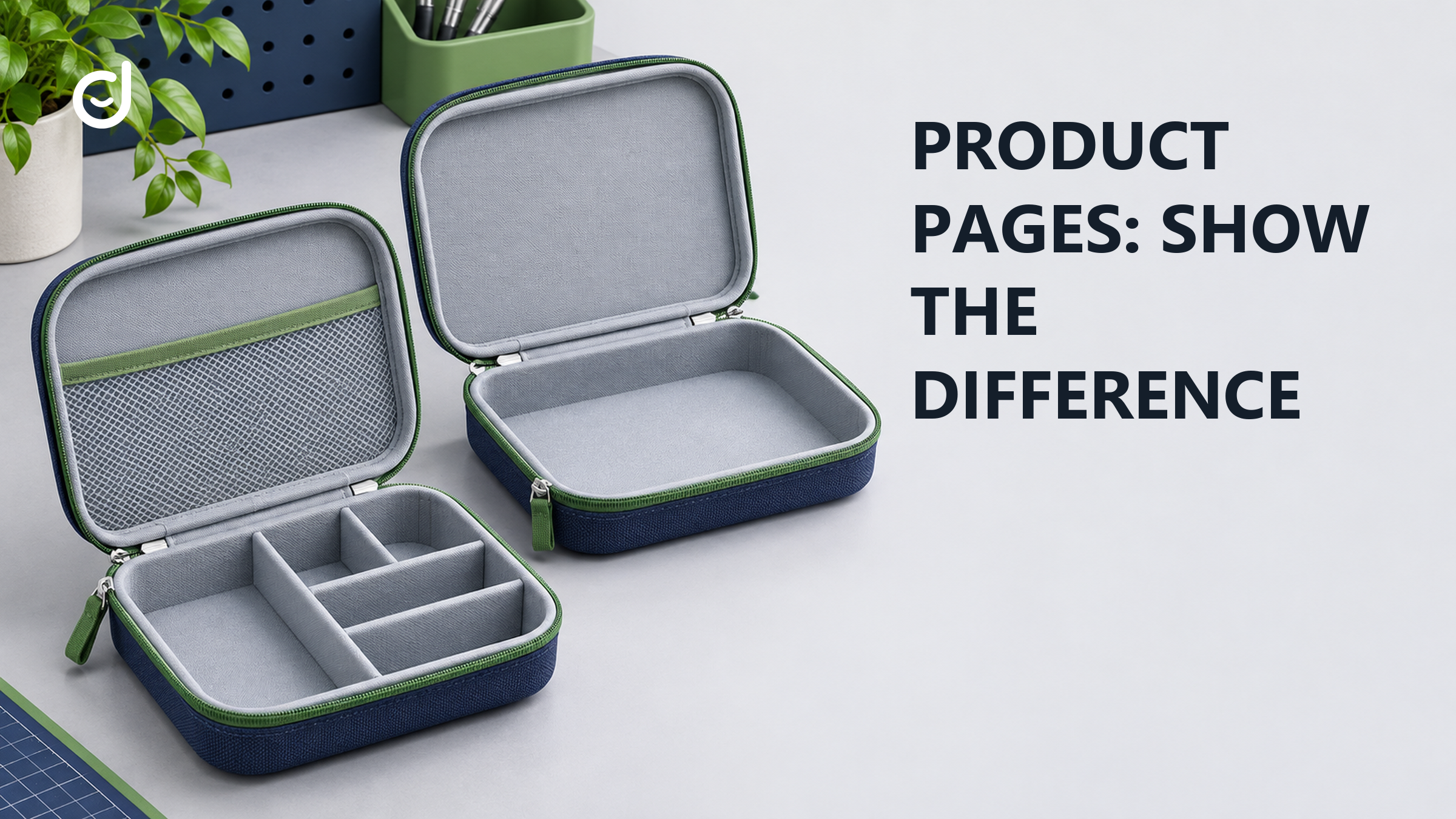
Imagine a seller with two small cases. This example is hypothetical. One case has dividers; the other has an open space inside. Before writing the pages, the seller checks both items. The dividers may suit small tools. The open space may fit a larger item.
That does not mean every small difference deserves a separate page. Sometimes options are variants of the same product. The important point is to decide how the catalog represents the actual choice and then describe it accurately. The product variants guide discusses how to model choices such as size and color.
Look at product records, photos, and maker details your team can check. Note the size, materials, what fits, included parts, and limits. Do not repeat a claim from a social post unless the product evidence backs it up.
Next, ask what a buyer must know before choosing. For the hypothetical cases, the interior layout may be more useful than a general statement that both are durable. A clear photograph can show the inside. A short description can explain which parts come with the product. If a dimension is uncertain, confirm it before publishing instead of guessing.
Fit can also set products apart. An add-on may work with only some devices, or a spare part may fit one model. These are examples, not claims about a real item. If fit drives the choice, show the checked answer before the buyer orders.
| Source | Observed point | Practical question |
|---|---|---|
| One public SEO discussion | A marketer asks how to distinguish pages for similar electrical products. | Which verified attribute actually changes the buyer's choice? |
| Google Search Central | Google provides ecommerce guidance for product information and site structure. | Can search systems discover the page and understand its accurate information? |
The Google ecommerce guidance explains ways to share product information and help search systems find pages. The public discussion shows a particular problem; it is not a customer success result.
Use this comparison before editing the catalog. The storage cases are hypothetical. Replace the details with verified facts from your own products, and do not publish a claim until the team can support it.
| Buyer question | Case with dividers | Open case | Page action |
|---|---|---|---|
| How is the inside arranged? | Dividers separate smaller items. | One open compartment holds a larger item. | Show an accurate interior image. |
| Will my item fit? | Check the usable space in each section. | Check the usable space of the full interior. | Publish verified internal measurements. |
| What is included? | Confirm whether dividers are included. | Confirm included accessories. | State the actual package contents. |
The table has two jobs. First, it helps the team find a difference worth explaining. Second, it shows which facts are still unknown. If the team does not know the internal measurement, the correct next action is to measure or confirm it, not to write a persuasive sentence about capacity.
A title can name the product and a detail that sets it apart. The text can explain who needs that feature and its limits. Base both on the real catalog. If the pages describe the same item, consider whether two pages are needed before changing the wording.
A good product page cannot help a shopper who cannot find it. Review the path from relevant categories and collections to the product. Google recommends making ecommerce pages reachable through links in the site's navigation, because those links help its systems discover the site's structure. See Google's guidance on ecommerce site structure.
Group product links around real shopper choices. A category can lead to a relevant collection, which can lead to the item. Check that the labels make sense to a person and that the links lead to the intended destination.
For a store with a large catalog, the collection navigation guide can help a team think through the path. If a product changes or goes out of stock, review the information that remains visible rather than assuming an old description is still correct.
Structured data tells search systems what the page describes. Product markup may describe an offer or other product details when the page and setup meet the rules. Google's product snippet documentation lists the supported fields and policies.
Start with the page and its real product facts. If the visible price, stock status, or item name is wrong, markup will not fix the offer. Keep the data consistent, and test the setup against Google's current guidance.
Markup is only one part of search, and a rich result is not guaranteed. Check whether the page can be found and its facts are correct.
Open the actual product page on a phone and a desktop. Can a buyer identify the product, see the verified difference, and find the information that resolves the main question? Check images, titles, options, and the link from the appropriate collection. If a page has a choice of variants, make sure the selected option and its information are clear.
Then review the search-facing basics for that page. Is it reachable through normal links? Does the product information reflect the current offer? If the team uses structured data, does it describe the same product and page? Record any issue with the page and the source of the correct information so the person making the fix does not have to guess.
Do not treat a single ranking change as proof that a copy edit worked. Search traffic can vary for many reasons, and a small number of visits may not support a firm conclusion. Use comparable periods and keep a record of what changed. The goal is a page that answers a real product question and can be found, not a promise of an instant result.
Questions from customers, support, and public content can reveal a detail to check. They do not prove a product has a feature. If shoppers ask whether a case fits an item, confirm its size before answering. Leave out claims you cannot support, or explain what is unknown.
The guide to turning buyer questions into page copy offers a related next step: test one question in the page text. First, decide which checked product facts make each page useful and easy to find.
For ecommerce product page optimization, begin with the fact a shopper needs to choose. If two products are different, show the real difference. If they are not, revisit the catalog structure before rewriting the same sentence twice.
Older Article
Influencer Marketing Metrics: What Can You Prove?>>
Latest Articles

As an essential, data-driven toolkit for TikTok influencers and marketers, KOLSprite provides powerful features for effortless creator discovery, trending content identification, and actionable real-time insights.
It empowers users to make smarter decisions and significantly boosts their TikTok business.

 Refer & Earn