 +
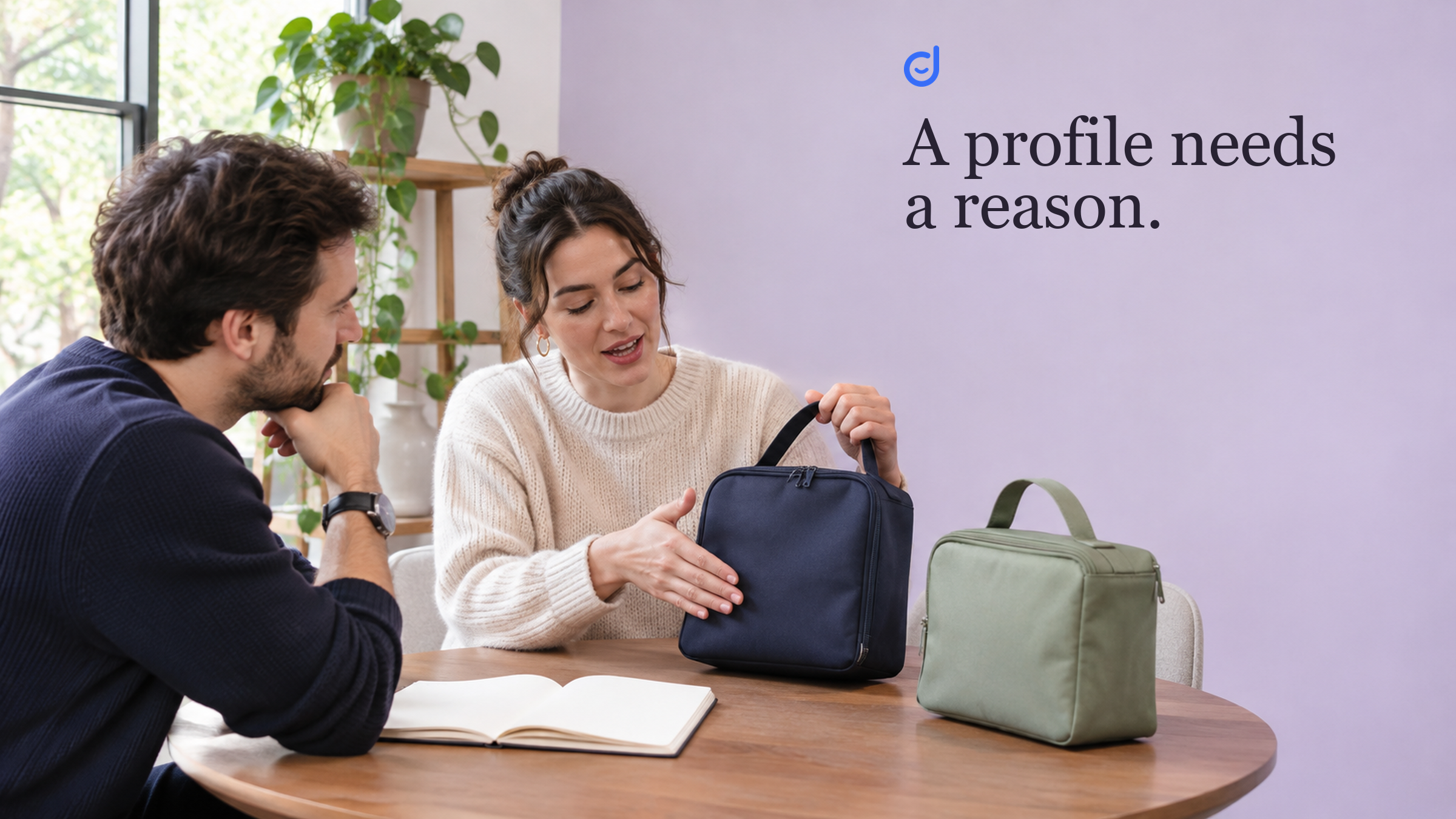
The profile has a name, an age, a favorite coffee, and a smiling photo. Yet nobody can explain why this person would choose the lunch bag. For an ecommerce research lead, the missing part is the buying decision, not another line of biography.
A buyer persona should represent a group using research about its goals, constraints, and choices. Separate what you know from what you assume, then connect each useful fact to a decision about the offer or message. The working sheet below shows how to turn an attractive fictional profile into questions a real research project can answer.
A team designing a lunch-bag page may need to know what the bag must fit and how it will be carried. Whether the buyer prefers a particular coffee shop may have little bearing on that page. A vivid detail earns space when it helps explain a relevant choice.
HubSpot defines a buyer persona as a profile of a target group built from research. It goes beyond age and other basic traits to cover goals, problems, behavior, and how people choose. That gives the team a reason to find evidence about a purchase, rather than make up a more detailed character.
| Source distinction | Implication for a working profile |
|---|---|
| The profile is based on research. | Keep the evidence behind each important assertion. |
| It represents a group. | Do not treat one person's account as every buyer's experience. |
| It goes beyond demographics. | Include constraints that affect the purchase. |
Source: HubSpot, checked November 17, 2026. The definition supports the research approach; it provides no findings about the hypothetical lunch-bag buyers below.
Ask of each proposed detail: what would we change if this were true? If the team cannot name a product, message, or service decision, the detail may be optional context. It should not carry the weight of a research finding.
Imagine a fictional brand planning research for a leak-resistant lunch bag. Its first draft describes a commuter who values convenience. That description is too broad to tell the team which photograph to commission or which product question to answer first.
The team has not interviewed this person. It should therefore label the profile as a hypothesis. Possible questions include what containers must fit, whether the bag goes inside another bag, and how the owner cleans it after a spill. These are research prompts, not facts about a customer group.
Each answer could change the page in a practical way. A fit concern may call for clear dimensions and a container view. Carrying the bag inside a backpack may make its shape important. A cleaning concern may require a close view of the lining and accurate care information.
| Working assumption | Question to investigate | Decision it could inform |
|---|---|---|
| The bag must fit a daily food container. | What do people actually carry, and what must fit together? | Which size views and dimensions the page needs. |
| The bag travels inside another bag. | How is it carried during the journey? | Whether to show its packed shape and handles. |
| Cleaning creates hesitation. | What part of care is unclear or difficult? | Which care detail to explain accurately. |
The sheet is a proposed research artifact. It does not claim that a study occurred. Keep it in that state until evidence supports, changes, or rejects the assumptions. A polished document should not make an untested idea look more certain than it is.
In a real research conversation, a recent purchase can give the participant something concrete to recall. Ask what they were trying to carry, which options they considered, and what made the final choice easier or harder. Let the person explain the sequence in their own terms.
A question that starts by telling someone the bag is convenient gives them less room to identify a different issue. The team may care about convenience while the buyer is worried about fit or the way the bag closes. Keep the question open enough for that difference to appear.
Preserve the context with the answer. A person buying for a short walk and someone carrying lunch on a long train journey may describe different constraints. That does not automatically require two personas, but it gives the researcher a distinction worth examining.
Never invent a quote to make the profile read well. If a line states what the team thinks an answer means, say that it is the team's reading. If it is a real person's exact words, keep those words intact. Obtain the consent and use the handling that the actual research project requires.
One strong account can suggest a useful question. It does not establish how common the issue is. Compare the available evidence and note where accounts agree, where they differ, and what the research has not covered.
A pattern should describe more than people who share an age range. It might concern a repeated carrying constraint or a recurring uncertainty at purchase. The useful grouping is the one that changes what the business should explain or offer.
The customer segmentation discussion groups known customers when they need a different next message. Persona research can help explain why a group buys. Customer records may help show who should receive a message. The two pieces of work can inform each other, but a list of names does not by itself explain a buying choice.
Keep exceptions visible when they matter to the offer. If the bag cannot serve a certain use, the profile should not turn that buyer into a bad customer. The product may simply be a poor fit for the task they need it to perform.
Put a supported finding to work in one page choice. If fit is the concern, show familiar food containers and give the bag's exact size. If care is the concern, show the inside clearly and state the correct care steps. The finding should help a buyer inspect something that matters to the choice.
The product-page optimization discussion asks what is still unclear before a buyer can choose. Use the profile to name that gap. It should give the team a reason for a specific change, not just decorate a broad rewrite. Keep the evidence with the decision so another person can see why the page changed.
Then decide how to judge the change. A new image may make the fit easier to inspect, but that does not establish a sales lift in advance. Keep the research finding, design choice, and later performance question as separate steps.
A working profile needs a source trail and a review trigger. New product uses, repeated support questions, or a change in the offer can give the team a reason to revisit it. Preserve the distinction between older findings and new assumptions as the document evolves.
Before the next shoot, turn the supported buying constraint into an image brief. The buyer-focused photography guide asks what each view needs to show. That is a useful test of the profile: it should help the team commission an image a buyer can use, not merely give the fictional character a face.
Latest Articles

As an essential, data-driven toolkit for TikTok influencers and marketers, KOLSprite provides powerful features for effortless creator discovery, trending content identification, and actionable real-time insights.
It empowers users to make smarter decisions and significantly boosts their TikTok business.

 Refer & Earn