 +
A Black Friday offer is ready, but your team has a harder choice: should you ask creators to promote it, run the offer without them, or wait? If you sell online in the US, start with the offer and the work each option requires. A creator can make a product easier to understand, but a good video cannot fix missing stock, unclear terms, or a deal that no longer makes sense after costs.
Choose a creator campaign when the product is ready, a relevant creator has time to make useful content, and both sides agree on the work. Run the offer without a creator when the deal is ready but that handoff is not.
Below is a practical way to make that call, check the TikTok Shop rules that may apply, and prepare a brief a creator can actually use.
Black Friday influencer marketing is often treated as a race to book as many posts as possible. For a small team, the more useful question is whether a creator can show something a shopper needs to see. A short demonstration might make a kitchen tool clear in a way a discount label cannot. A clothing creator might show how a garment fits. But if the item is out of stock in the size shown, that useful video can send viewers to an offer they cannot buy.
Begin with one product and one offer. Write the price and the dates the offer is meant to run. Ask the person who owns stock whether the featured item and its variants should be available. Then identify the buyer question a creator could answer: what fits inside, how the item works, or what comes in the box. These are planning questions, not proof that a video will create sales.
If you are still picking a product, use the holiday product-choice guide first. It covers the earlier decision: which item can support a sound offer. This article starts after you have a candidate and need to decide how to promote it.
| Route | Choose it when | What to settle first |
|---|---|---|
| Product offer only | The deal and listing are ready, but no creator is booked. | Confirm the offer, stock and campaign requirements. |
| Offer plus creator | A relevant creator can show a real buyer benefit within the time and budget available. | Agree on the work, payment, disclosure and any reuse rights. |
| Delay creator content | The offer is not final or the creator cannot get the product in time. | Resolve the missing input before asking for a finished video. |
These routes are choices, not performance rankings. If your team can make a clear product page and serve existing customers but has no time to manage a creator, the first route may be the honest one. You can still plan a creator test later. On the other hand, if a buyer needs to see a product in use and a suitable creator is available, the second route gives that work a clear purpose.
A delayed creator handoff is useful when the alternative is a rushed one. The seller may need another day to confirm which color is in stock, or the creator may need to test the item before making an honest recommendation. Put the reason for the delay beside the owner who can resolve it. Do not promise a video or a posting date until both sides can support it.
If you plan to use TikTok Shop's US Black Friday and Cyber Monday campaign, check your own Seller Center. The 2026 seller guide says a seller can join the product campaign without also joining a separate content campaign. It also says some content or creator campaigns may require the product to be registered in a product campaign first.
That distinction matters. A brand's plan to hire a creator is not the same thing as acceptance into every platform campaign. Likewise, a product campaign registration does not tell you that a particular creator is eligible for a separate opportunity. Ask each person to check the relevant page rather than forwarding a screenshot and assuming it applies to everyone.
| Question | What the official guide says | Practical next step |
|---|---|---|
| Must every product campaign include creator content? | The seller guide says a product campaign can be joined without a separate content campaign. | Choose the product route on its own merits. |
| Can a creator campaign depend on product registration? | Some content or creator campaigns may require the product to be registered first. | Check the specific campaign before agreeing to the handoff. |
| Is every creator eligible? | The creator guide says requirements vary by creator type. | Have the creator check their own campaign status. |
Sources: TikTok Shop's US seller and creator BFCM guides, checked November 9, 2026. The comparison describes the guides, not an approval for your account.
The seller guide describes a November 11 through November 30 campaign window in Pacific time. Other programs may use different dates. If you are planning outside that window or using another channel, check the rules for the specific offer you intend to run. The guide is a starting point for a real account check, not a substitute for it.
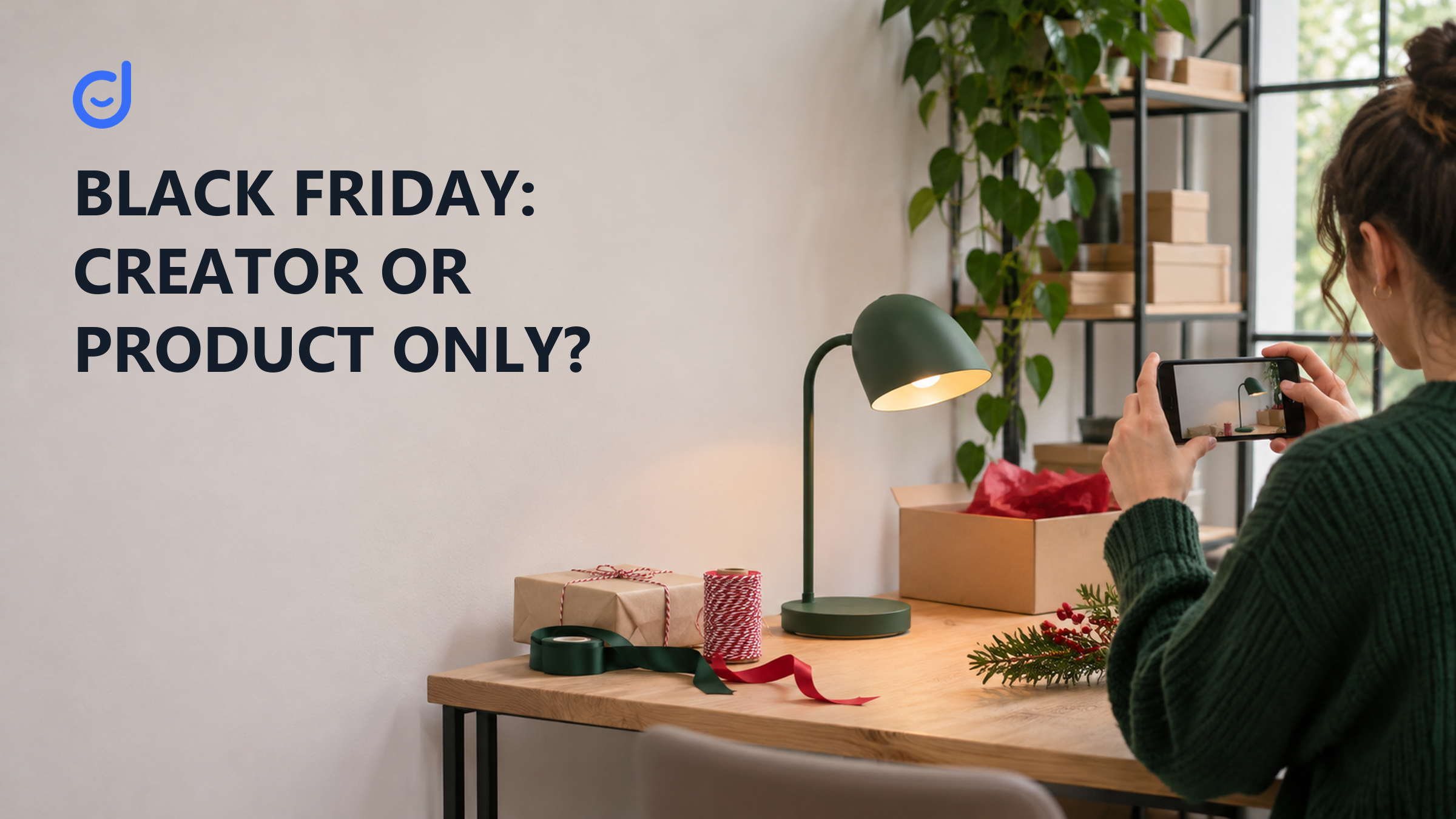
Imagine a small seller has selected a desk lamp for a seasonal offer. This is a made-up example, not a campaign we observed. The shopper's question is whether the lamp can light a small work area without taking much desk space. The creator's task is to show the lamp on a desk, turn it on, and explain what the viewer can actually see. The brand should provide the exact item and any claims it can support.
Now add the practical details. Who sends the lamp, and by when? Is the creator making one video or several assets? When is the first draft due? Is the brand requesting an approval step? What fee or other consideration has been agreed? If the brand wants to reuse the content in ads, say so and agree on the scope rather than assuming a public post grants that right.
Keep the creator's part of the idea open. The brand can name the real product and the question the video needs to answer. The creator can suggest a setting or opening that fits their normal work. Ask for changes when a claim is wrong or a required detail is missing, not simply because a sentence sounds different from the brand's internal copy.
The creator brief template provides a fuller handoff. For the seasonal decision here, a short written agreement on the offer, deliverable, timing and rights is enough to expose gaps before the product ships.
Give the creator the exact offer you have approved and the period in which it applies. If a discount depends on a code, say where the code works and what to do if it stops working. Avoid a vague instruction such as “tell people it is the lowest price” unless that claim has been verified for the relevant period. A creator should not have to guess which variant is on sale or whether an accessory is included.
Discuss disclosure before the creator posts. The FTC's guidance explains that a material connection can include payment or free or discounted products. It also explains that a connection should be clear to viewers. The facts of a particular endorsement matter, so use the guidance and seek appropriate advice when the arrangement is unclear.
If you want to build an ongoing program rather than a one-off holiday post, the creator program guide covers the wider operating choices. Keep the holiday handoff focused on what this creator needs for this offer.
Suppose the offer is ready but there are only a few days left. First ask whether the creator can receive and use the actual product in time. If not, do not ask them to imply firsthand use. A product-only offer, supported by accurate existing materials, may be better than a rushed endorsement. If the creator already has the item and has time to agree on the work, keep the request narrow and give the team a clear approval contact.
After the campaign, keep the decision as useful as the post. Record what you spent, what content was delivered, which links or codes you could track, and what remains unknown. An untracked purchase is not proof that no one bought; a tracked purchase is not automatically proof that the creator caused it. Those distinctions help the next budget discussion without turning the holiday into a pile of numbers that nobody can explain.
Choose the route your team can support, write the missing details down, and make the creator's job clear before asking for content. That is a stronger starting point than sending the same urgent request to a long list of people.
Latest Articles
As an essential, data-driven toolkit for TikTok influencers and marketers, KOLSprite provides powerful features for effortless creator discovery, trending content identification, and actionable real-time insights.
It empowers users to make smarter decisions and significantly boosts their TikTok business.

 Refer & Earn