 +
+
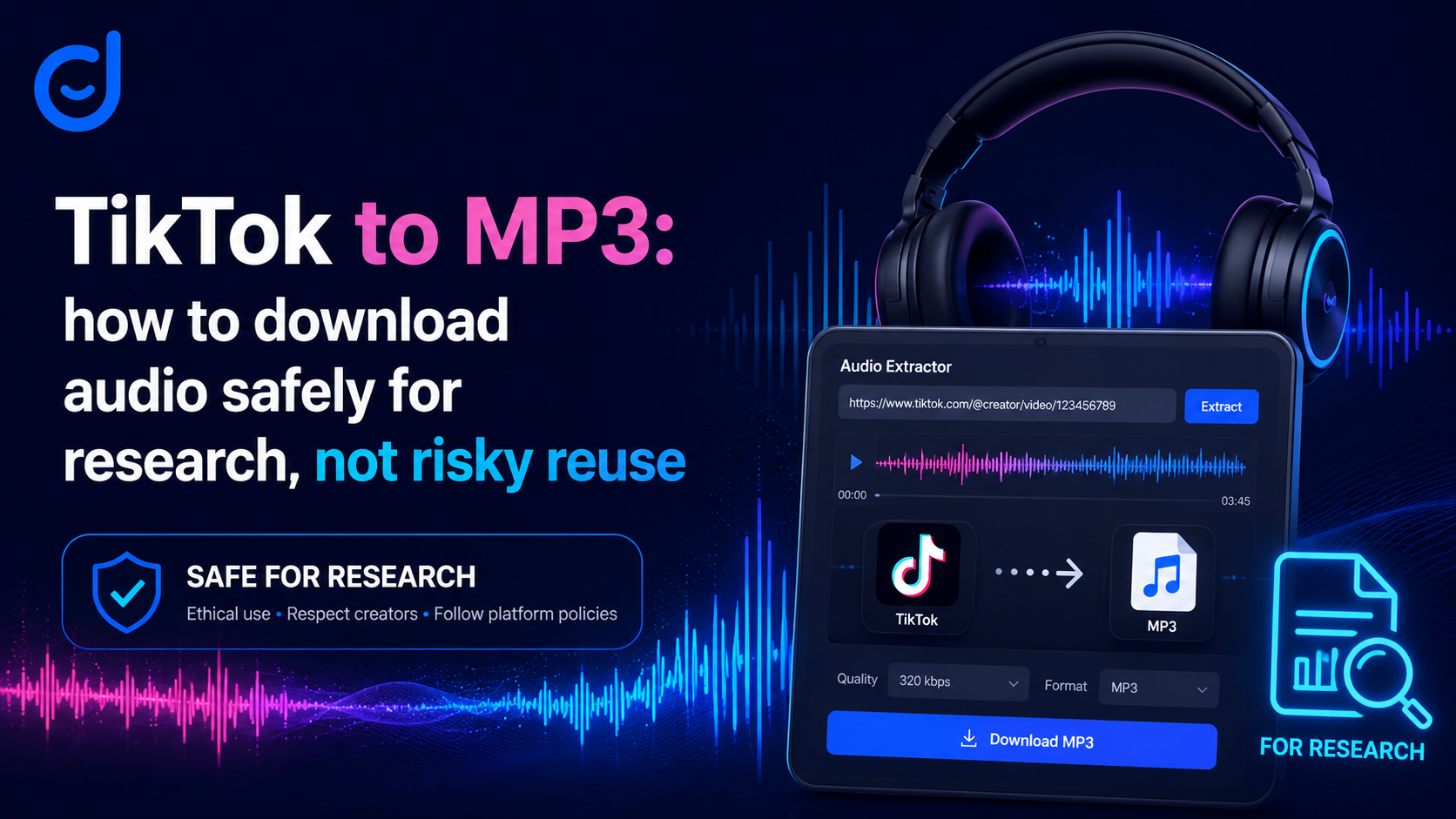
TikTok to MP3 tools convert public TikTok audio into an MP3-style file, but downloading audio does not automatically give you the right to reuse it in ads, product videos, or commercial posts. For brands, the safer workflow is to research why a sound works, check usage rights, and brief creators to make original content. KOLSprite supports this by helping teams analyze videos, scripts, creators, and product-content fit.
People download TikTok audio for many reasons: saving a sound, transcribing a clip, studying a creator's hook, building a content swipe file, or referencing a trend in a team meeting. These are not all the same. A personal reference file carries different risk from using the audio in a paid ad or brand account.
For TikTok Shop sellers, the useful output is not the downloaded audio itself. It is the insight behind the sound: the pacing, emotional cue, meme context, spoken hook, product demonstration, or comment behavior that made the content spread.
| Use case | Risk level | Better workflow |
|---|---|---|
| Internal trend research | Lower, if public and properly documented | Save the URL, notes, sound context, and content pattern |
| Creator brief reference | Medium | Ask creators for original concepts and check sound availability |
| Organic brand post | Depends on account type and sound rights | Use platform-approved sounds and verify commercial restrictions |
| Paid ad or product page reuse | Higher | Secure rights and use cleared audio |
KOLSprite can support TikTok audio and video research without positioning the download as the end goal. Use the platform to analyze videos, compare creator content, organize examples, and connect content patterns with products. If downloading a public video or audio reference is appropriate, keep the file tied to notes and source links.
For creator campaigns, connect the sound research to UGC strategy, creator selection, and contract terms. If a creator's audio, likeness, or footage may be used in paid media, define usage rights in writing before launch.
Audio trends can be confusing because the same sound may be available in one context but restricted in another. Keep an audio research log so the team understands what was studied, what was approved, and what still needs clearance.
| Field | What to record | Publishing decision |
|---|---|---|
| Original sound URL | Public TikTok video link and sound page if available | Lets the team verify context |
| Sound role | Voiceover, music cue, meme beat, product demo, or transition | Shows what part of the format matters |
| Commercial status | Unknown, platform-approved, licensed, creator-owned, or needs review | Blocks risky reuse before ads |
| Creative takeaway | Hook pattern, pacing, caption idea, or script structure | Helps create original content |
| Next action | Use only as reference, request rights, use cleared music, or reject | Turns research into a safe production choice |
This log is especially useful when multiple creators or agencies touch the same campaign. Everyone can see which sounds are inspiration only and which assets have permission for organic posts, paid ads, or product-page use.
Before a brand posts or boosts a video that uses audio found on TikTok, run a quick commercial-use check. Ask whether the sound is available to the account type, whether the planned use is organic or paid, whether the creator owns any voiceover or custom audio, and whether the contract grants the rights you need.
This may feel slower than copying a trending sound, but it protects the campaign. It also pushes the team toward stronger original creative instead of relying only on borrowed audio.
When in doubt, brief the rhythm, mood, or script pattern instead of the exact sound. A creator can often recreate the same persuasive structure with cleared music, original voiceover, or a platform-safe audio choice. That gives the brand more control when the content is later used in ads or translated for another market.
Want to discuss TikTok audio, scripts, and creator brief workflows? Join the KOLSprite Discord community for practical content research conversations.
 +
+
Join the KOLSprite Discord community
The best use of a TikTok to MP3 workflow is often script research. A sound or voiceover can reveal pacing, tension, joke timing, or product explanation structure. Instead of reusing the MP3, break the audio into parts. What happens in the first 2 seconds? Where does the creator create curiosity? When does the product appear? What line answers the buyer objection? Where is the call to action?
Once you understand the structure, write an original script for your product. Keep the persuasive logic but change the wording, proof, and creator voice. For example, if the reference audio works because it compares "what I expected" with "what happened," the original script can use the same contrast while using new footage, new language, and cleared audio. This is safer and usually better for creator authenticity.
KOLSprite can support this process by helping you find multiple videos using similar structures. One audio reference may be a novelty. Several videos using the same pacing or objection pattern can reveal a real content angle. Combine that with creator discovery so the format is assigned to someone who can deliver it naturally.
Before publishing, attach rights notes to the final script. Mark whether the audio is original, platform-approved, licensed, creator-owned, or still under review. If the video may become a paid ad, confirm rights before launch. This protects the brand and keeps the team from rebuilding a campaign after the creative is already approved.
Audio download content should be reviewed with extra care before publishing. Keep the distinction clear: researching a public sound is different from using that sound in a brand post, ad, landing page, or product video. Avoid language that implies every TikTok sound is free for commercial use. The article should guide readers toward cleared audio, original scripts, usage-rights checks, and creator agreements when needed.
For KOLSprite, the best CTA is not "download more audio." It is to research the content structure behind high-performing videos, find creators who can adapt that structure, and manage the campaign with clear rights notes. This keeps a high-volume TikTok to MP3 keyword aligned with a professional creator marketing workflow.
On future refreshes, verify any music-rights guidance and avoid naming specific legal outcomes unless they are sourced from current official documentation.
Keep the article useful for marketers by adding examples of safe alternatives: original voiceover, cleared commercial tracks, creator-owned audio with written permission, or a new script inspired by the reference structure. These alternatives give readers a compliant next step.
It depends on the content, rights, jurisdiction, and use case. Downloading for research is different from reusing audio commercially. Check TikTok rules and rights before publishing.
Do not assume that a trending TikTok sound is cleared for ads. Use approved commercial music or properly licensed audio for paid campaigns.
Save the public URL, sound context, creator example, hook structure, product role, and rights notes. These details help your team create original content.
KOLSprite helps teams analyze videos, discover creators, connect products to content angles, and turn audio trends into compliant briefs.
Latest Articles
As an essential, data-driven toolkit for TikTok influencers and marketers, KOLSprite provides powerful features for effortless creator discovery, trending content identification, and actionable real-time insights.
It empowers users to make smarter decisions and significantly boosts their TikTok business.
 Refer & Earn