 +
+
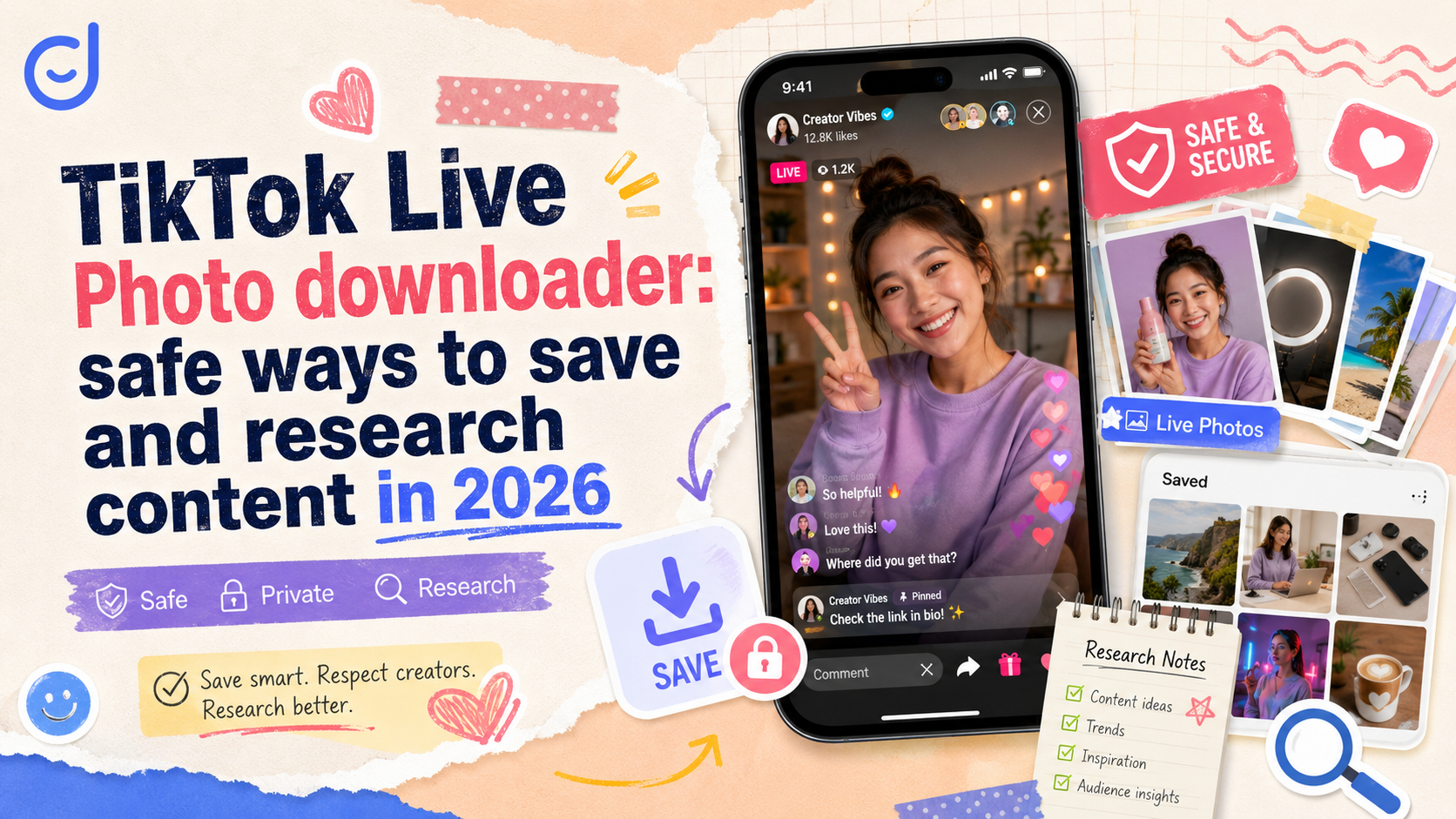
A TikTok Live Photo downloader should only be used for public content, personal reference, research, or permitted brand workflows. Do not reuse a creator's Live Photo, video, audio, face, or product claim in ads or commercial pages without permission. For sellers, the safer workflow is to download only what you are allowed to study, then use KOLSprite video search and content analysis to turn examples into original creator briefs.
A TikTok Live Photo is a moving image format that users may save or use depending on TikTok's current product behavior and content permissions. People search for TikTok Live Photo downloader tools when they want to save a creator's visual, preserve a reference, or collect examples for content planning.
For brands, the important point is usage. A downloaded reference can help your team study pacing, visuals, captions, and creator style. It does not automatically grant rights to reuse the asset in ads, product pages, emails, or other commercial material.
| Use case | Safe intent | Watch-out |
|---|---|---|
| Content swipe file | Study hooks, visuals, and objections | Do not republish the creator's asset |
| Creator brief | Show format inspiration to approved creators | Ask for original footage and claims |
| Team reporting | Document public examples for internal review | Keep creator attribution and links |
| Ad creative planning | Identify the pattern to test | Secure usage rights before using creator content |
Downloading should not be the end of the workflow. The useful output is a better brief. With KOLSprite, teams can research public videos, find similar creators, connect content angles to products, and manage outreach. The goal is to understand why a format worked, then ask the right creator to make a new version for your product.
Start with KOLSprite's TikTok video download tool only when downloading is appropriate. Then use video search to compare more examples and creator search to find creators who can reproduce the content logic in their own voice.
If your team saves TikTok Live Photos or videos for research, keep an asset log. This is a simple EEAT and compliance habit: it shows where the example came from, why it was saved, and what your team is allowed to do with it.
| Field | What to write | Why it matters |
|---|---|---|
| Source URL | Original TikTok link and creator handle | Keeps attribution and verification possible |
| Research purpose | Hook study, product demo, caption style, or creator fit | Separates research from reuse |
| Usage status | Internal reference, creator-approved, licensed, or not cleared | Prevents accidental commercial use |
| Brief takeaway | The pattern to adapt in original content | Turns assets into campaign learning |
| Owner | Team member responsible for checking rights | Creates accountability before publishing |
For most seller teams, this log can live next to creator outreach notes. If a downloaded reference influences a paid campaign, add contract and usage-rights details before production starts. That reduces confusion later when a strong clip becomes useful for ads or product pages.
The most common mistake is assuming that "downloadable" means "usable." A creator may make public content that is easy to save, but commercial reuse can still require permission. This matters even more when the asset includes a person, a voice, music, a recognizable product claim, or a branded environment.
The second mistake is saving assets without source context. A file on a desktop loses value quickly if nobody knows which creator posted it, what the original caption said, or why the team saved it. Keep the source URL and research note together. The third mistake is briefing creators to copy the saved asset too closely. Use downloads to understand patterns, then ask creators for original footage, original language, and product-specific proof.
A good rule is simple: download for memory, not for imitation. Your team should be able to explain the idea without needing to reuse the creator's file. That keeps the campaign focused on original production while still learning from public TikTok examples.
Need a second opinion on whether a content reference is safe to use? Join the KOLSprite Discord community and discuss TikTok content workflows with other sellers and creator teams.
 +
+
Join the KOLSprite Discord community
When a TikTok Live Photo inspires a campaign, turn it into a rights-aware brief. Start with a short reference note: "This public TikTok example uses a close-up product reveal, a three-step demo, and a final texture shot. We want to adapt the structure, not reuse the file." That sentence matters because it tells the creator and your team that the downloaded reference is inspiration only.
Next, write the original production requirements. Ask for new footage, original voiceover or approved audio, clear product handling, and claims that match your product documentation. If the product has compliance limits, include approved phrases and banned phrases. If the content may be used in paid ads, include usage rights in the creator agreement before filming begins. If the video is only for organic posting, record that limit so the asset is not reused later without permission.
Then define the research takeaway. Instead of saying "copy this Live Photo," say "we want the same type of visual proof: product in hand, real use case, before-after contrast, and a simple CTA." This gives the creator creative room while keeping the campaign aligned with the original insight. It also protects the brand from accidental imitation.
KOLSprite can help you find more examples before the brief is final. One downloaded reference may be misleading. Five or 10 public examples can show which visual proof is common in the category and which creator types use it well. When the team sees the pattern across multiple videos, the brief becomes stronger and less dependent on one creator's original asset.
Downloader keywords can bring strong search demand, but they also need careful framing. Avoid making the article sound like a promise to extract, reuse, or republish any creator asset. Keep the focus on public content, research use cases, rights-aware workflows, and original creator briefs. This protects the brand and makes the article more useful for sellers who need content inspiration without creating rights risk.
For KOLSprite, the conversion path should lead from "save a reference" to "analyze the pattern." Link readers toward video research, creator discovery, and contract or usage-rights guidance. That turns a simple downloader query into a more valuable workflow for TikTok Shop sellers, agencies, and DTC content teams.
When refreshing this article, recheck TikTok's current content saving behavior and avoid step-by-step claims that may change by device, region, or account setting.
It is also worth adding a short editorial reminder near the CMS draft: replace any old screenshots if TikTok changes the content menu, download label, or share flow. Visual mismatches can make an otherwise accurate article feel outdated.
You may be able to save public TikTok content depending on TikTok's current product behavior, device, region, and creator settings. Only use tools that respect public access and platform rules.
Not without the proper rights. Commercial usage may require creator permission, usage rights, music clearance, and platform-compliant claims.
Save the public URL, creator handle, hook, product category, buyer objection, and reason the example is useful. These notes matter more than the file itself.
KOLSprite helps you analyze examples, find similar creators, create better briefs, and manage outreach so research turns into original campaign work.
Latest Articles
As an essential, data-driven toolkit for TikTok influencers and marketers, KOLSprite provides powerful features for effortless creator discovery, trending content identification, and actionable real-time insights.
It empowers users to make smarter decisions and significantly boosts their TikTok business.
 Refer & Earn