 +
+
Your ads manager wants to add a product to TikTok Shop GMV Max this week. The campaign can choose among available creatives, but does the product have enough clear, authorized video to test? List the exact listing and every video the campaign can use. Then check product eligibility, rights, budget, and how you will read the result in Seller Center. Launch a small test only when those pieces are in place. If the videos do not show the product well, make a better one first.
TikTok Shop GMV Max can use eligible campaign assets. It cannot create a good demo or grant permission to use a creator's post. Public product research can hint at content supply, but only your account can confirm usable video. The readiness sheet below keeps those facts apart.
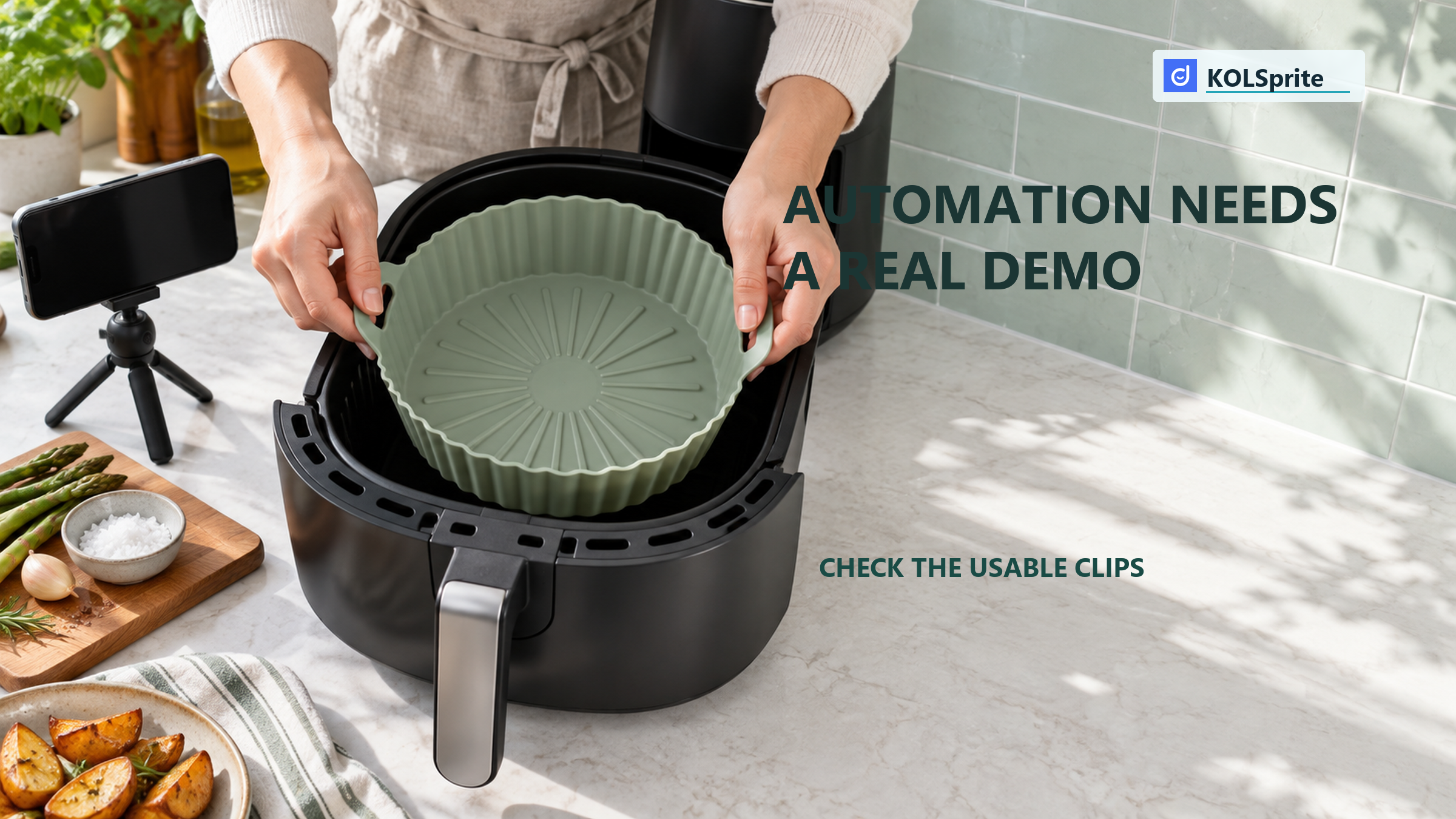
Start with the exact product listing you would add to the campaign. Record the title, variant, current price, and the main reason a shopper would buy it. For a round silicone air-fryer liner, the claim might be about fit or cleanup. The video must show that claim in a way a viewer can check. A clip that only pans across a countertop gives the campaign an asset, but gives the shopper little proof.
Now write the question the campaign is meant to answer. For a first test, keep it close to what you can observe: can the available product and creative set produce orders while staying within the budget and return threshold your team chose? Your threshold comes from your own economics. Public sales counts cannot set it, and an automated campaign does not remove the need for a margin floor.
Decide what would make you hold the launch. A missing listing approval, no authorized video, a weak product page, or a budget the team cannot review are reasons to stop. This is a preflight, not a forecast. Its job is to keep a preventable setup gap from being confused with a judgment about demand.
A US KOLSprite product result checked on October 8, 2026, showed a round silicone air-fryer liner with 2,208 reported units over 30 days. It had three linked videos and three linked creators in that public result. A broad query also returned other types of mats, so exact product matching mattered. This is one observed listing in a small result set. It is enough to ask whether visible content coverage is thin. It is not enough to say the product is ready or unready for your ads account.
Public product clue: one round silicone air-fryer liner result, 2,208 reported 30-day units, three linked videos, and three linked creators. The counts do not show ad rights, creative quality, or campaign performance.
Source: KOLSprite US product search, checked October 8, 2026; one exact match from a small public result set. TikTok's Product GMV Max overview describes the campaign type. Check your account for current availability and permissions.
Three linked videos could mean a short public trail around that result. It could also miss videos that your team owns or can authorize through other routes. Inspect the clips before you count them as useful. Do they show the same size and shape as your listing? Do they reveal how the liner fits in a basket and what happens after cooking? A count cannot answer those questions. The campaign can optimize placement, not a missing demonstration.
Look at the product row and the actual listing side by side. A near match can mislead when diameter, material, pack size, or included parts differ. If the public result is a two-pack and you sell one liner, its price or content may not be a fair comparison. Use the public row to form questions for your own listing, not to borrow its outcome. For a broader view of what each metric can answer, use the TikTok Shop analytics decision map.
Register for KOLSprite and claim a three-day trial of the web product to inspect public product and content clues. Verify creative rights and campaign settings in Seller Center. MCP access is sold separately.
Register and claim a three-day trial
Make a simple list with one row per video. Include the link, the product it shows, its owner, and whether your team has permission to use it in the planned campaign. Add a short note on what the viewer can verify in the first few seconds. Keep "exists" and "authorized" in separate columns. A creator's public post may help you judge the market, but it does not by itself give your shop ad rights.
Watch each video as a buyer would. Can you see the liner placed in an air-fryer basket? Is its shape clear? Does the clip show a real use instead of a still product shot? Is the product on screen long enough to recognize? If the video makes a cleaning claim, does it show the cleanup? Do not fill a weak set with near-duplicate edits just to raise the count. The goal is enough distinct proof for the claims you plan to make.
Check the landing listing too. Its images, title, variant, and shipping terms should match the video. If the clip shows a different size or a feature the listed item lacks, a paid click may create confusion. That problem belongs to the product and content team before it belongs to the campaign. A strong placement cannot repair a mismatch between the ad and the item for sale.
For the authorization step, follow TikTok's current Product GMV Max setup guide in Seller Center and the controls in your own account. The official setup path is where you confirm which products and creatives can be selected. Do not take a public creator count as proof that any one video is available to your campaign.
The sheet should fit on one page and travel with the launch request. Give every line an owner and a status: ready, needs work, or blocked. Attach the relevant account view or working document so a teammate can check the call. This is a decision record, not a list of platform fields copied into a memo.
Product: Exact listing and variant, buyer claim, current price, margin floor, and a working product page.
Creative: Every candidate video, the proof it shows, and any product mismatch that needs an edit.
Permission: The owner of each video and the account status that lets your campaign use it.
Budget: Test cap, review dates, and the person who can pause or change the campaign.
Attribution: The account reports you will use, the comparison period, and the limits of that comparison.
The product line needs seller-owned numbers. Write down what an order contributes after product cost, fees, fulfillment, and any costs you expect to assign to the campaign. Choose a test cap that you can afford even if the first days teach you little. Product GMV Max may automate parts of delivery, but your team still owns the amount at risk.
For creative, a short list of clear clips is more useful than a long list of weak ones. One video may show the liner going into the basket. Another may show food coming out and the liner being cleaned. Those are examples of proof to look for, not a claim that the observed public product has such clips. If your authorized set cannot show the product's main use, mark creative "needs work" and delay the test.
Permission deserves its own signoff. Note which posts are owned by the shop, which come from creators, and what access your account actually shows. If a creator post is attractive but not authorized, leave it out of the ready set. The readiness decision should use only videos the campaign can select now, not videos someone hopes to secure later.
Share a specific GMV Max preparation question with the KOLSprite community.
 +
+
Before launch, name the account report and time window you will use to review spend, orders, and the return metric relevant to your goal. Record the product's recent sales pattern outside the campaign. This gives the team context, though it does not create a perfect control group. The campaign report and shop orders may answer different questions. Put both on the review agenda instead of forcing them into one number.
A campaign can run at the same time as creator posts, a coupon, or a listing change. Note those changes as they happen. If orders rise, you can say what the account reported for the campaign and what happened in the shop during the same period. You cannot automatically assign every change in shop sales to the ads. The preflight should make that limit visible before anyone asks for a win or loss headline.
Choose a first review point and a final decision point. At the first, check that the correct product and authorized creatives are live and that spend remains within the cap. At the second, compare the account result with the margin floor and decide whether to continue, change the creative set, or stop. Write who can act at each point. A budget without an owner is a weak control.
For a closer look at video choices before they enter an ad test, see the TikTok Shop video ads guide. The readiness sheet should still use your own clips, rights, and account view. Public examples can sharpen questions, but they cannot approve an asset for you.
Launch a constrained test when the exact product is eligible, the page and videos agree, the usable clips show the core claim, permissions are clear, and the team has a budget and review owner. "Constrained" means a cap and a planned check, not a promise that the test will be cheap or profitable. If the product has only one usable clip, the call depends on what that clip proves and what your team can afford to learn.
Repair the creative set when the product and economics are sound but the proof is thin. Make or secure a clip that answers the main buyer question. Hold the product when eligibility, rights, margin, or a usable product page is missing. These are practical states, not grades for a public listing. A product with thousands of reported units can still be a poor candidate for your account today.
Use KOLSprite product search with the exact silicone air-fryer liner listing in the US market. Inspect the scoped public record for visible video and creator counts, then watch the matching content. Put that bounded clue in the creative line of your sheet. Use Seller Center to confirm product eligibility, creative access, and the campaign setup available to your account. The public clue informs the preflight; it does not make the launch decision.
KOLSprite does not set Product GMV Max ROI, grant video permissions, choose spend, or show your campaign attribution. The observed liner row also says nothing about the quality of those three linked videos. Keep the public date and sample beside the figure if the sheet is shared. Otherwise, a small content clue can turn into a false claim about readiness.
After the first review, update the sheet with what changed: a new authorized clip, a corrected product page, a lower cap, or a hold. The TikTok Shop campaign dashboard guide can help frame the next reporting check. For this week's call, the most useful sentence is plain: "Launch this exact product with these authorized videos and this cap," or "hold until this named gap is fixed."
Latest Articles
As an essential, data-driven toolkit for TikTok influencers and marketers, KOLSprite provides powerful features for effortless creator discovery, trending content identification, and actionable real-time insights.
It empowers users to make smarter decisions and significantly boosts their TikTok business.

 Refer & Earn