 +
+
For sellers and content teams, TikTok ad library is useful only when it helps make a real choice. This guide shows how to use ad evidence around a magnetic phone stand without overstating the data. The direct answer is simple: the most valuable thing in an ad is often the question it answers on camera. By the end, you will have a three-column creative review card that can guide the next brief, test, or stop decision.
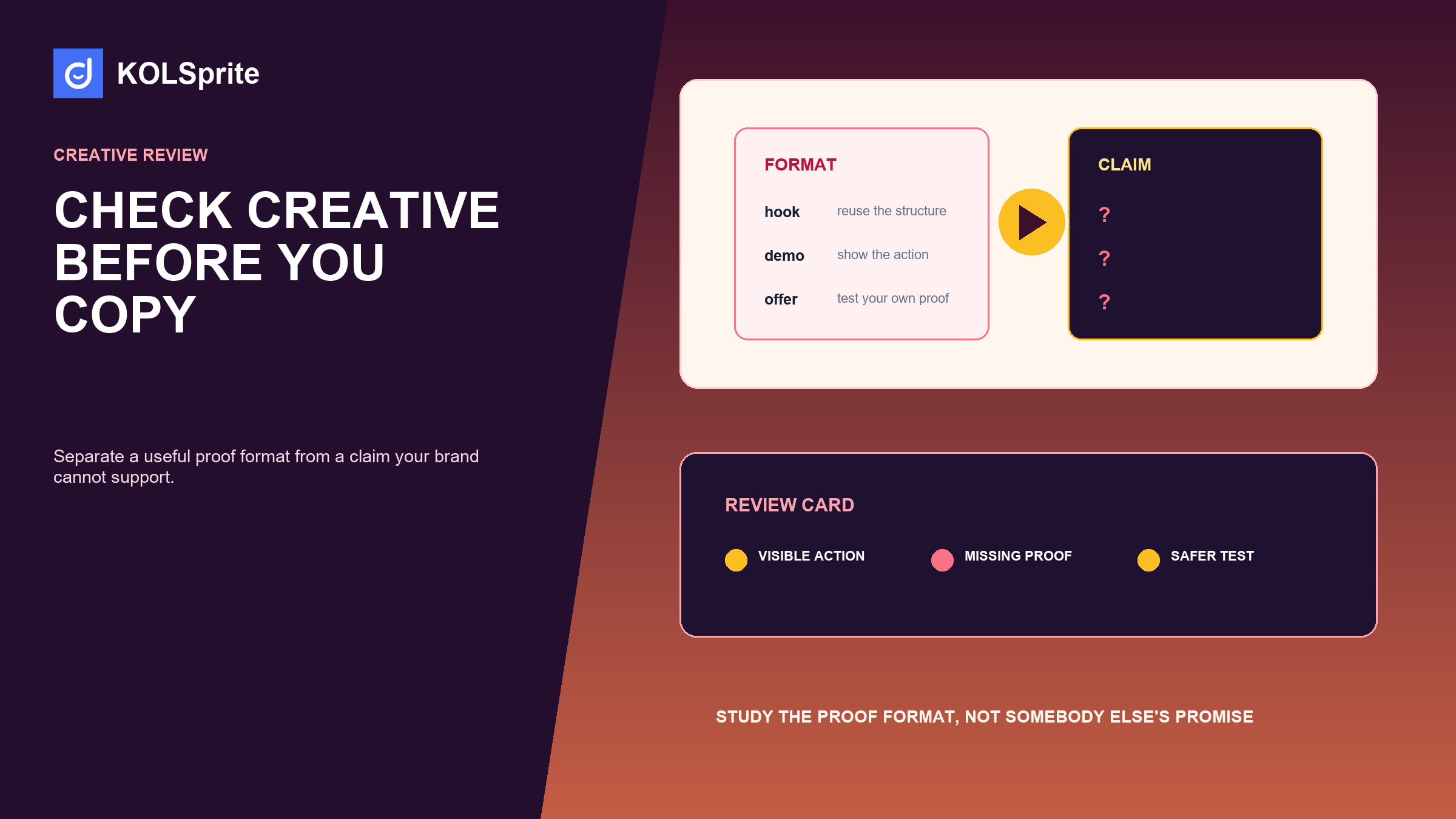
The point of view: Study the proof format, not somebody else's claim. The risk is copying an offer, performance promise, or asset that has not been approved.
Instead of summarizing a whole video as ‘good creative,’ pause at the moment when the product earns belief. A phone stand may earn attention with a fast hook. But the valuable signal is whether viewers can see attachment, stability and the actual use position.
For the magnetic phone stand question, write one line naming the buyer job, visible proof and claim limit. Keep that line beside a three-column creative review card so the brief stays tied to a real use case.
Do not promote the ad evidence phrase into product copy until the magnetic phone stand shows the promised action in the buyer setting: a busy desk, a car interior and a travel setup.
Write the opening structure in one column and the factual claim in another. A fast before-and-after setup can be useful as a format. A promise about charging speed, strength, or device fit needs its own product evidence before it reaches your script.
Test the idea in a busy desk, a car interior and a travel setup. Ask what a colleague would need to see before accepting it, then turn that answer into one check inside a three-column creative review card.
If the magnetic phone stand example works only in a polished setup, mark that limit. The three-column creative review card must survive a normal buyer condition, not only a perfect demo.
Try the ad evidence workflow with a real decision.
New KOLSprite users can claim a three-day trial membership to compare the product, creator and video evidence behind one magnetic phone stand question.
Start your three-day trial
Every polished ad leaves something outside the frame. A car mount may look secure while hiding the road surface, the device weight, or the placement limits. Those gaps become a better brief for your own test.
At the ad evidence handoff, attach the source and next owner. That keeps ask what the viewer still cannot see open to a later check instead of turning it into a takeaway nobody can revisit.
Keep the original wording beside the three-column creative review card. That lets the team separate what was observed, what was inferred and what still needs a test.
Keep the proof sequence. But replace the borrowed promise with a question your product can answer. ‘Will it stay put during a normal drive?’ is a legitimate test. ‘The strongest mount ever’ is not a research finding.
If the magnetic phone stand result is weak, record the missing proof, fit, offer, or cost beside a three-column creative review card. A precise failure note prevents the next browse from repeating the same mistake.
A weak ad evidence result can still teach the owner what to change. Record the missing magnetic phone stand fact instead of smoothing it over with a stronger headline.
| ad evidence field | What to record | Decision it supports |
|---|---|---|
| Observed signal | one public product-linked result showed 17.8 million visible plays and 4,748 recent units | Whether the magnetic phone stand example deserves closer review |
| Proof need | One visible action in a busy desk, a car interior and a travel setup | What the next brief must demonstrate for this use case |
| Known limit | copying an offer, performance promise, or asset that has not been approved | What the team must check outside public platform data |
| Next action | a three-column creative review card | A named test, hold, or handoff for this decision |
Ad Evidence source note: KOLSprite MCP public US-market snapshot for the magnetic phone stand, accessed August 7, 2026. This example shows how to use a three-column creative review card. It does not estimate the whole category.KOLSPRITE_DISCORD_CTA
A practical ad-library review starts with the first two seconds. Write down what the viewer sees, what promise appears next and what proof arrives before the call to action. Then ask which part is repeatable for your category and which part depends on the original creator, offer, or rights situation.
This creates a better creative brief than copying a winning frame. It tells the editor what must be tested, the seller what must be verified and the reviewer what would count as a meaningful result. A strong reference is useful because it exposes a decision, not because it looks popular.
Use KOLSprite to keep the source video, creator context and review note together. That makes it easier to return to the original evidence when a team member asks why a concept was selected or whether the footage can be reused.
A creative reference is useful when it sharpens the test instead of inviting a copy. Before you share the creative review card, mark what was observed, what was inferred and what still needs a check.
The creative reviewer should leave one useful format, one rejected claim and one safe filming request for the next producer.
When a new reference appears, revise the creative card and keep its claim boundary beside the source.
Close the creative card by naming the useful format, the claim to replace, the rights question and the next safe shoot. Save the reference beside its rights note and let the next safe shoot decide whether the format deserves another test.
Want a second set of eyes on a three-column creative review card?
 +
+
Join the KOLSprite Discord community
A saved reference is not a license. Keep the URL, creator, date and internal research purpose with each item. TikTok’s Creative Center can help teams inspect advertising patterns, while rights and final claims still require their own review.
Keep the detail that changes the next ad evidence brief. The three-column creative review card should make the magnetic phone stand choice easier to defend, not summarize every signal in the category.
Use a three-column creative review card to choose one next clip, creator, listing change, or sample check. More examples are not better when the magnetic phone stand decision stays open.
KOLSprite video search is useful when the team needs to compare product-linked clips, creator context and public engagement without losing the source. It supports the review card. It does not decide legal clearance or product truth.
Finish the KOLSprite step by naming the next move: test, hold, compare, or stop. KOLSprite can keep the magnetic phone stand source and creator context near that choice for the next owner.
This creative review is complete when another owner can explain the magnetic phone stand choice and repeat the check without asking for hidden context.
For ad evidence work on a magnetic phone stand, keep the buyer job intact when the format changes. The TikTok ad library question decides whether this source becomes an Amazon brief, a Shopify page test, or a creator request.
Start the magnetic phone stand handoff with the scene that makes the need obvious: a busy desk, a car interior and a travel setup. For a ad evidence review, ask which action earns belief and which product limit must appear before the viewer accepts the claim.
Give a three-column creative review card its own source, signal, proof, limit and next-action fields. In a ad evidence handoff, that small record shows why the example matters without sending the next owner back through a folder of screenshots.
In this creative review, compare the ad evidence example with a busy desk, a car interior and a travel setup. A high-play result is not enough when copying an offer, performance promise, or asset that has not been approved. Record the proof gap, creator fit and next choice in a three-column creative review card.
Run the smallest ad evidence test that can change the choice. For this ad evidence work, expand a supported test idea, record a failed one and move on when the magnetic phone stand evidence stays weak.
A useful TikTok ad library process ends with one concrete commitment: who will run the next ad evidence check, which magnetic phone stand condition they will review and what result would alter the plan. Keep the source beside the takeaway for a three-column creative review card, then decide whether the next move is a test, a hold, or a request for better evidence.
For a related next step, use video evidence search, compare it with UGC strategy guide and move the resulting decision into TikTok video search for ecommerce. For the platform-level boundary relevant to this creative review, see TikTok Creative Center.
Newer Article
<<TikTok Video Downloader: A Safer Research Workflow
Latest Articles

As an essential, data-driven toolkit for TikTok influencers and marketers, KOLSprite provides powerful features for effortless creator discovery, trending content identification, and actionable real-time insights.
It empowers users to make smarter decisions and significantly boosts their TikTok business.
 Refer & Earn