 +
+
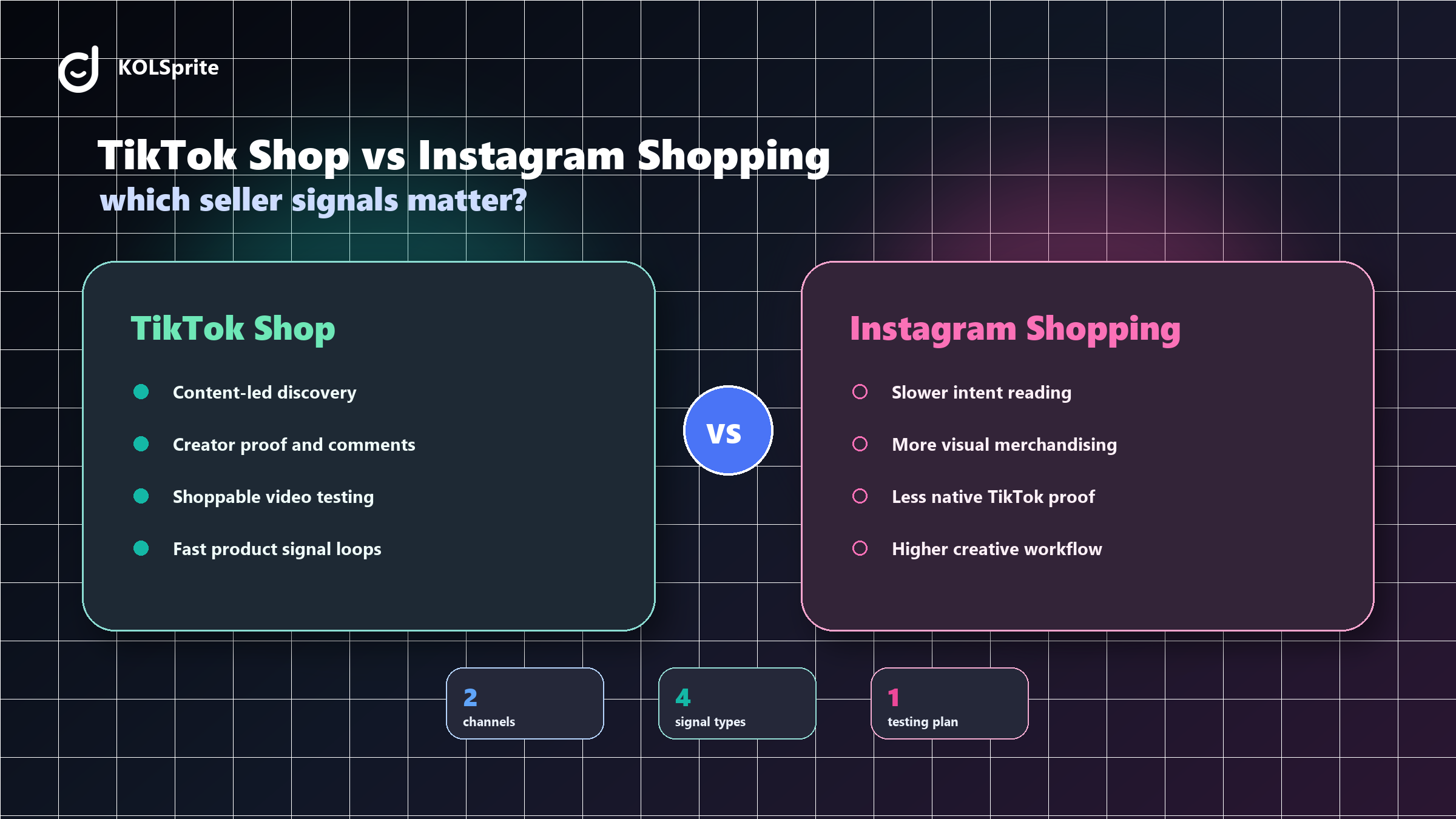
TikTok Shop vs Instagram Shopping is not only a platform choice. It is a signal choice. TikTok Shop is stronger when sellers need content discovery, creator-led product education, and shoppable video testing, while Instagram Shopping is stronger when brands already have visual demand, community trust, and catalog-driven browsing.
DTC teams often ask which social commerce platform wins. That is the wrong first question. The better question is: which platform gives this product the strongest buyer signal?
TikTok Shop and Instagram Shopping reward different behaviors. TikTok is more discovery-led. Instagram is more identity-led. A buyer on TikTok may meet a product through a creator demo. A buyer on Instagram may respond to visual trust, brand consistency, and catalog browsing.
TikTok Shop is attractive when the product needs explanation. If the buyer does not know the problem exists, a creator can make it visible. If the product has a strong demonstration, TikTok can compress awareness and consideration into one video.
A Shopify brand selling a stain-removal pen may look ordinary in a catalog. On TikTok, a creator can show a coffee spill, a 10-second fix, and a real-time reaction. The product has a content job that fits TikTok.
Instagram Shopping can be stronger when the brand already has an audience, visual consistency, and a product that benefits from browsing. Fashion, beauty, home decor, and lifestyle goods can perform well when buyers want to explore a collection rather than react to one demonstration.
This does not mean TikTok is irrelevant. It means the role changes. TikTok may discover new hooks and creators, while Instagram captures brand demand and repeat consideration.
Want to compare notes with other TikTok commerce operators? Join the KOLSprite Discord community for creator research, product research, and campaign workflow discussions.
 +
+
Join the KOLSprite Discord community
Before investing heavily, sellers should use TikTok video search and the KOLSprite Extension to inspect similar videos, comments, and creators.
KOLSprite does not replace a channel strategy. It improves the TikTok research layer. Sellers can inspect creators, analyze videos, collect research materials, and connect content signals to product and outreach decisions.
That is especially useful when a DTC team is deciding whether TikTok Shop deserves serious investment. Instead of guessing from a few viral videos, the team can review patterns, creator fit, and content formats more systematically.
TikTok Shop vs Instagram Shopping seller signals becomes useful only when the team turns it into a repeated operating habit. A single analyst can find examples, but a seller team needs shared criteria. That means every saved creator, video, product note, and script idea should answer the same basic questions: what product problem is visible, what buyer is being addressed, what proof is shown, and what decision should the team make next?
For DTC brands, Shopify teams, and social commerce operators, the practical workflow should connect channel signal review, product-content fit, creator fit, storefront readiness, and campaign allocation. If one of those steps is missing, the team usually falls back into manual browsing and scattered notes. The result is predictable: the same creator gets reviewed twice, useful videos disappear in chat threads, and the next campaign starts from zero.
A better operating model is to review signals in batches. Pick one product or category, collect a small but relevant research set, score it with the same criteria, and decide what deserves action. This keeps the work focused. It also gives managers a way to compare campaigns instead of relying on memory or isolated screenshots.
KOLSprite fits this model because it keeps TikTok browsing close to the workflow. The team can inspect videos and creators in context, then move useful signals into product research, creator shortlists, outreach briefs, or campaign notes. The advantage is not that every decision becomes automatic. The advantage is that fewer decisions are made from incomplete evidence.
Most teams track the easiest metrics first: views, likes, follower count, and number of creators contacted. Those numbers are visible, but they are not enough. The better question is whether the signal helps the next campaign decision.
| Metric | Why it matters | How to use it |
|---|---|---|
| TikTok comment intent on similar shoppable videos | Shows whether the market is asking buying or use-case questions. | Turn repeated questions into script points, product page copy, and FAQ answers. |
| Instagram save, click, and catalog interaction patterns | Shows whether the pattern is isolated or repeatable. | Prioritize categories where multiple creators can explain the product naturally. |
| creator-led content output compared with brand-led catalog conversion | Shows whether research is turning into campaign movement. | Compare product angles, creator tiers, and outreach templates after each batch. |
These metrics are deliberately practical. They do not promise that a product will go viral, and they do not pretend that creator performance can be predicted perfectly. They help the team make better next moves: which creators to invite, which objections to answer, which videos to brief, and which product angle to stop testing.
The first mistake is asking which platform wins before defining the product job. TikTok can surface useful signals quickly, but a single video is not a market. Look for repeated patterns across creators, comments, and formats before making a campaign decision.
The second mistake is judging TikTok only by viral reach or Instagram only by visual polish. Size can help with reach, but fit drives believability. A smaller creator with the right buyer context can produce stronger learning than a large creator who has no natural relationship with the product.
The third mistake is running both channels without assigning different jobs to each. TikTok research should produce original decisions, not copied creative. Use observed videos to understand buyer language, proof points, objections, and pacing. Then create briefs that match your product, claims, inventory, shipping promise, and creator relationship.
A useful creator brief should be short enough for a creator to understand and specific enough to protect the product message. It should include the buyer problem, product proof, must-avoid claims, suggested angles, and examples of questions buyers ask. It should not force the creator to copy another video frame by frame.
Use a simple brief structure: audience, problem, product proof, content angle, required disclosure or claim limits, optional hook ideas, and success criteria. If the creator is an affiliate, add commission and sample details. If the creator is paid, add deliverables, usage rights, timeline, and revision rules.
This is where KOLSprite's browser workflow becomes a bridge between research and execution. The same session that surfaces a video or creator can also produce the notes needed for a better brief. That reduces the gap between finding a signal and acting on it.
When publishing this topic on the KOLSprite blog, link to the most relevant product pages in context. Use KOLSprite creator search when discussing creator discovery, KOLSprite product search when discussing product signals, KOLSprite video search when discussing content examples, and the KOLSprite Extension when discussing TikTok browsing workflows.
For GEO and AI answer engines, keep the direct answer near the top, preserve the key takeaways section, and keep the workflow table visible. AI systems are more likely to reuse content that states a clear definition, gives a structured framework, and answers follow-up questions in plain language.
It depends on product fit. TikTok Shop is stronger for creator-led discovery and demonstrable products. Instagram Shopping is stronger when the brand already has visual trust and catalog demand.
Track similar video performance, comment intent, creator-category fit, product demonstration clarity, and whether successful formats are repeatable.
Yes. Many brands use TikTok for discovery and creator testing, then use Instagram for community, retargeting, and catalog browsing.
KOLSprite helps sellers analyze TikTok while browsing, inspect creators, review video formats, and turn TikTok signals into product and creator decisions.
Latest Articles
As an essential, data-driven toolkit for TikTok influencers and marketers, KOLSprite provides powerful features for effortless creator discovery, trending content identification, and actionable real-time insights.
It empowers users to make smarter decisions and significantly boosts their TikTok business.
 Refer & Earn