 +
+
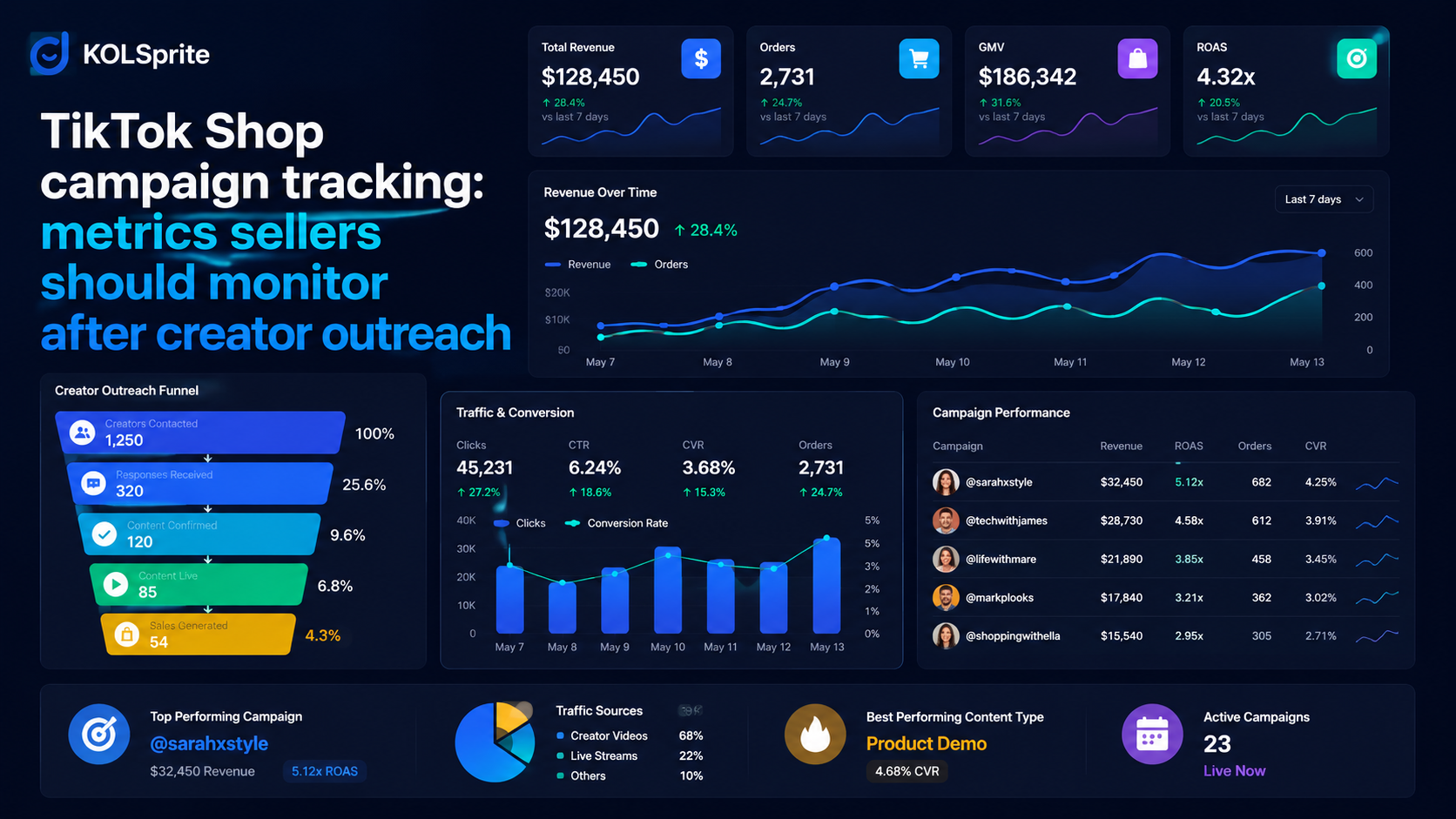
TikTok Shop campaign tracking should measure the full creator workflow: discovery, outreach, sample status, content publication, engagement, sales impact, and reinvite decisions. Sellers should not judge campaigns only by views because the operational steps before publishing often explain why performance happened.
The keyword plan treats campaign tracking as a P0 cluster because it turns discovery and seeding into repeatable learning, which is central to KOLSprite's workflow positioning.
The 2026-06-12 Firehose replay window was sparse, so this article treats fresh Firehose data as demand context and uses KOLSprite context plus official or current market references for publishable claims.
For teams that already recruit or seed TikTok creators and need a better way to explain what happened before and after content goes live, the important point is operational. Search interest is useful only when it becomes a better decision: which product to test, which creator to contact, what content angle to brief, what sample to send, and what campaign result deserves another investment.
KOLSprite content should therefore avoid generic TikTok advice. The goal is to help sellers build a repeatable loop from market signal to creator selection, from outreach to content, and from campaign review to the next creator shortlist.
Campaign tracking is the set of fields, statuses, and review habits a team uses to understand creator campaign progress and outcomes. It should include both operational status and performance learning, because a campaign can fail before any buyer sees the content.
A practical workflow should be specific enough that two teammates can make the same decision from the same record. That means defining the product, creator, market, content format, outreach status, sample status, published content, and follow-up action instead of relying on memory.
This also matters for AI search and answer engines. Clear definitions, structured tables, direct questions, and evidence notes make the article easier for people to use and easier for AI systems to summarize accurately.
Use this scorecard as a working checklist. It is not a promise of performance. It is a way to make sure the team is evaluating the right operating signals before spending time, samples, or budget.
| Decision area | What to check | Why it matters |
|---|---|---|
| Discovery quality | Fit score, niche, audience intent, recent activity | Shows whether selection was sound |
| Outreach health | Reply rate, acceptance rate, message angle | Shows whether the offer and message work |
| Fulfillment control | Sample status, delivery, deadline | Shows operational bottlenecks |
| Content performance | Live URL, hook, views, comments, CTA clarity | Shows content-level learning |
| Business outcome | Orders, GMV signals, reinvite decision | Turns results into next action |
KOLSprite is best framed as a TikTok creator intelligence and workflow platform, not only as a profile lookup tool. Teams can start with KOLSprite creator search, validate product and category context with product search, review content examples with video search, and organize follow-up inside the KOLSprite workbench.
The platform connection matters because a creator decision is rarely one field. A seller needs to know why a creator was shortlisted, what product they match, what message was sent, whether a sample moved, what content went live, and what the next action should be.
Use KOLSprite as the operating layer around creator search, creator value analysis, collaboration management, campaign tracking, content research, product selection, and AI-assisted scripts. Keep final decisions grounded in product economics, creator quality, buyer intent, and campaign evidence.
The shared pattern behind these mistakes is the same: teams treat creator marketing as a list-building task. A list is only the beginning. The business value comes from a workflow that records what happened, why it happened, and what the team should do next.
In week one, define one product category, one target buyer, one market, and one content job. Build the first version of the creator qualification fields before searching so the team does not change criteria after seeing attractive profiles.
In week two, build a focused creator shortlist and separate creators into three groups: ready for outreach, monitor for later, and reject with a reason. This makes the research reusable even when the campaign changes.
In week three, send outreach or sample offers to a controlled group. Record message angle, offer type, reply status, sample status, and deadline. If the team cannot track these fields, do not scale the campaign yet.
In week four, review content and results. Look at published content, comment intent, product visibility, CTA clarity, orders or GMV signals where available, and creator reliability. End every creator record with a next action: reinvite, negotiate, test another product, monitor, or stop.
Use the review as a handoff document for the next campaign, not as a one-time report. The next shortlist should inherit what the previous campaign proved, disproved, or left uncertain.
Before the next campaign starts, summarize the handoff in plain language for the team: which audience responded, which creator type explained the product best, which objection appeared most often, which content angle was worth repeating, and which operating step created friction. This keeps the workflow practical for marketers, operators, and managers who need to act quickly without rereading every creator note.
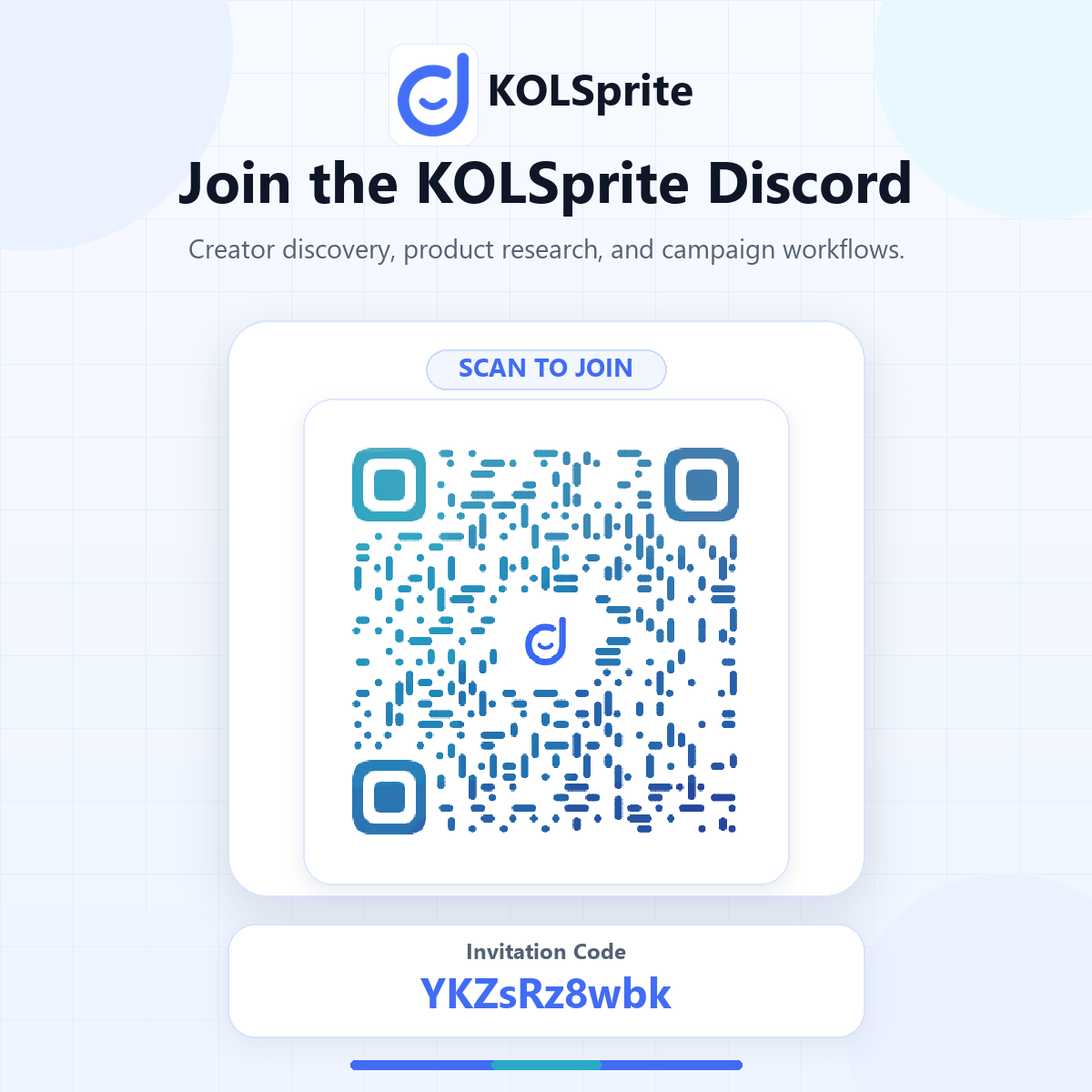
Want to compare TikTok creator workflows with other operators? Join the KOLSprite Discord community for creator discovery, product research, outreach, and campaign tracking discussions.
 +
+
Join the KOLSprite Discord community
There is no single metric. Combine publish rate, content quality, buyer intent, orders, GMV signals, and reinvite potential.
For KOLSprite teams, the practical follow-up is to connect the answer to a visible workflow field: creator status, product fit, content angle, outreach note, sample status, performance signal, or reinvite decision.
Yes. Non-posting creators reveal problems in qualification, terms, sample logistics, briefing, or follow-up.
For KOLSprite teams, the practical follow-up is to connect the answer to a visible workflow field: creator status, product fit, content angle, outreach note, sample status, performance signal, or reinvite decision.
It shows which creator types, markets, content formats, and product angles deserve another search.
For KOLSprite teams, the practical follow-up is to connect the answer to a visible workflow field: creator status, product fit, content angle, outreach note, sample status, performance signal, or reinvite decision.
KOLSprite supports campaign management, effect tracking, creator search, workbench organization, and creator workflow decisions.
For KOLSprite teams, the practical follow-up is to connect the answer to a visible workflow field: creator status, product fit, content angle, outreach note, sample status, performance signal, or reinvite decision.
Review operational status during outreach and fulfillment, then review content and sales signals after each publishing wave.
For KOLSprite teams, the practical follow-up is to connect the answer to a visible workflow field: creator status, product fit, content angle, outreach note, sample status, performance signal, or reinvite decision.
Source note: this article uses the local Firehose package generated on June 12, 2026, KOLSprite product context, and official or current market references. Weak Firehose matches are treated as demand signals, not as factual authority.
Latest Articles
As an essential, data-driven toolkit for TikTok influencers and marketers, KOLSprite provides powerful features for effortless creator discovery, trending content identification, and actionable real-time insights.
It empowers users to make smarter decisions and significantly boosts their TikTok business.
 Refer & Earn